Home AboutArchivesBest Of Subscribe

The Journey

Life

It’s 11pm, as I leave a certain broadcasting centre in West London. Time to go home. I take the tube; partly for cost reasons, and partly because of a rather nasty case of claustrophobia. The larger tube trains don’t set that off, you see. Either way, taking a taxi home after every late shift isn’t an option.

I get on the tube, and sit down. To my right are three people. None of them are wearing a mask. But hey, I’ve been the person saying that lung issues can be invisible, and that we shouldn’t leap to conclusions about people. Maybe they’re all exempt. I sit back with my book, and try not to think about it.

I’m soon at my interchange, and I quickly change lines. Annoyingly, my next train is at a different platform to normal; I have to run up some stairs. My lungs protest – I have some nasty scarring from pneumonia back in 2016 – but I manage to make it with about half a minute to spare.

We move off. At the next station, somebody comes aboard and sits in front of me. They’re wearing a mask. Good. I concentrate on my book. Until I suddenly become aware of somebody else sitting to my right… without a mask. But, y’know. I have lung issues myself – I manage to wear a mask, but it can be uncomfortable at times – but you wouldn’t know it to look at me. Maybe they’re exempt.

My stop. Thankfully. I can relax a little. I walk briskly out of the station… and into a group of people playing football with a plastic pint glass, and yelling. Well, we’re outside, masks aren’t really required, are they? I pick myself through the group – a little too close for comfort when there’s a lot of them, but whatever – and head for home.

But as I get to the traffic lights, two people cut across me. They’re not wearing masks, either… and they’re heading directly for the pub opposite. “You got your mask?”, asks one to the other.

The other bursts out laughing. “No!” And off they trot.

And that was my journey home from work tonight. A journey made by a key worker, who has zero opportunity to work from home. A journey made just at the point where a second wave of Covid has frankly already started. A journey made by someone who already has lungs which are shot to hell and back.

*   *   *

By the way, they were all men.

# Now I Work for the BBC… #

TV Comedy / TV Presentation

Just how many quotes from “Elstree” by The Buggles can I use as headlines on Dirty Feed? (It’s two and counting, so far. There will be more.)

But in 2014, I did indeed used to work for the BBC, at BBC Elstree Centre on Clarendon Road.1 That stopped at the end of 2017 unfortunately, which means I don’t get to accidentally walk through a Holby City shoot and get yelled at. Oh well, it was fun while it lasted.

As for what I actually did at Elstree, that’s a tale for 30 years time. Still, while I wandered those corridors, I began to piece some things together in terms of the television shot there over the years. Which meant that I could take a look at this shot from Series 2 Episode 4 of Alexei Sayle’s Stuff (TX: 09/11/89):

A corridor in Elstree

And notice that the same corridor was used 27 years later in Eric Idle’s The Entire Universe (TX: 26/12/16):

The same corridor in Elstree

But that’s not really what I’m talking about today. This is a short story of a very specific prowl around the building. Although it is linked to the above corridor.2

What is now known as BBC Elstree Centre has a long and illustrious history, starting in 1914 as the site for the studios of Neptune Films. For the full version of that history, check out this section of Martin Kempton’s excellent ‘History of TV studios in London’; but here’s the short version. ATV used the site between 1958 and 1983, and then the BBC took it over in 1984. And being a TV geek of a certain flavour, I am rather interested in anything to do with ATV.

My challenge: could I find any obvious remnants of ATV at Clarendon Road, even though they had left the site 30 years before I got a chance to take a look around?

I can’t say I had a free run of the place. As much as I’d have loved to poke around in the galleries, plenty of doors were locked. And I was always wary of a burly security guard or two appearing behind me and giving me a good telling off. Still, I looked in the places I had access to. And for a while, it seemed like I wouldn’t find anything.

And then, I saw it. Tucked away in the same corridor pictured in the TV shows above – although little further down, just outside Studio C – I came across the following. With apologies for the terrible image quality…

Wide shot of ATV label

Close-up of ATV label

And if you actually got to the end of this post, I’m sure you got just as much of a kick out of that as I did.


  1. Well, more or less. I won’t bore you with the details of outsourcing, at least not today. 

  2. I seem to spend my entire life writing about corridors in some fashion or another. A trait I share with most Doctor Who fans. 

The Facts Speak for Themselves, My Friends

Music / TV Comedy

Before I knew what library music was, I used to get awfully confused, you know.

There was the time when I was watching Live & Kicking, and music used in Red Dwarf suddenly appeared. Then there was the time when I was at a show in Cadbury World, and, erm, music used in Red Dwarf suddenly appeared. (If you think I have a limited range of reference now, that’s nothing on me at 17.) More amusingly, there was the time when I was listening to Trent FM, and an advert came on… using the music from Central News East a few years previously. (Was that deliberate, to give the ad some already-bought legitimacy in the minds of the audience? Probably not, but it’s fun to ponder.)

These days, I know exactly what library music is, thank you very much, and the world seems a less puzzling place. And recently, a particularly pleasing strand was joined up in my head, as I was clicking around searching for library tracks used in The Young Ones.

That track was “Drama Heights” by John Scott. I first heard it on Spotify, on a 1976 library album called Drama – Tension, but the entire thing is available on Soundcloud for easy embedding::

One Way Static Records · Drama Heights (John Scott * Mark Of The Devil 2 * 1973 Soundtrack)

And it’s a track virtually anybody of a certain age who lived in the UK will recognise, as the main theme for Trev and Simon’s eternally amusing “World of the Strange” sketches:

So, let’s trace things back a little. Where did “Drama Heights” actually come from originally?

The Soundcloud embed above gives a clue as to at least one use: in the film Mark of the Devil Part II, a 1973 German horror/exploitation film that very few people seem to have anything positive to say about. (“Medieval torture and witch-hunting have never been so boring” seems to be the general gist.) The film is so well-loved by its rights owners that, erm, the whole thing has been uploaded to YouTube, and nobody seems to give a damn.

To be honest, the film is exactly the kind of film I don’t want to watch, so I hope you APPRECIATE the fact that I have gone through it, and found the section which uses the track:

Which means that hilariously, we now have a link between German exploitation flicks, and, erm, Fruitang:

At 29 seconds into that advert, Trevor Neal is this: funny.

So, was “Drama Heights” written for Mark of the Devil Part II? Certainly, the official soundtrack release seems to indicate that it was, without outright stating it:

“John Scott too contributed some music for the score, Scott who is now a seasoned film music composer respected by many, began his career in film scoring as a composer by writing the music for another horror movie A Study in Terror, which was released during the mid 60s. John also had another career as being the legendary sixties producer who recorded several artists like Tom Jones, The Hollies, The Beatles, etc. John is also known for his saxophone work on films like Goldfinger and several Henry Mancini projects. Mr. Scott won 3 Emmys throughout his career.”

You would be forgiven for thinking that John Scott wrote the track specifically for the film, from that paragraph. But “contributed” isn’t the same as “written”, and I was suspicious.

So, the obvious thing is to turn to Discogs. That turns up one very obvious-looking release – the album called Drama – Tension from Conroy in 1976. This is an album which has escaped out into the digital age – indeed, it’s the album I mention above which is on Spotify, which is where this whole little tale started. So, that’s the answer then, yes? That it actually was written for the film, and then became library music a few years afterwards?

No. We can trace it back further. To 1968, in fact – five years before Mark of the Devil Part II. It’s still a Conroy release, and it doesn’t appear to have a name, just a catalogue number. So hello to BMLP 056:

Cover of album
Side 2 of album


It’s worth noting that “The best of the backgrounds” isn’t the album title – it’s a slogan which was also used on other releases – so we can save ourselves a rabbit hole of thinking this was some kind of Best Of release. As far as I can tell, this was the very first release of “Drama Heights”. Not 1976, not 1973, but 1968.

And who would have guessed in 1968 that the same piece of music would be used in dodgy horror films featuring gratuitous torture scenes, and a Saturday morning kids TV show?

The joy of where library music ends up never seems to fade.

Read more about...

“Pedestrian, camp fantobabble”

Children's TV / Meta / TV Gameshows

There are many pieces of terrible pop culture writing online. I’ve done plenty of it myself. But sometimes, a piece of work is so dreadful, that it lingers in your head for well over a decade. To the point where it actually falls offline, and you need to use the Wayback Machine to find it.

Such was the case with this piece on Knightmare from 2002. And it really is absolutely bloody awful.

The scene is set in the third paragraph, with possibly the least promising sentence ever written:

“Actually, as I write, I realise that I haven’t seen Knightmare for sodding years.”

An admission which leads to beautiful moments like this:

“It got rubbisher, as well: in a desperate attempt to fiddle with the formula, the producers ditched many of the more atmospheric locations and charismatic characters (notably Pickle, Treguard’s wonderful gay elf sidekick) in favour of comic hangers-on and tedious gimmicry. The eyeshield, anyone? Pah.”

Unfortunately, the facts are as follows: both the eyeshield and Pickle debuted in the same series. Series 4, to be exact.1

After that, deconstructing the article is like shooting fish in a barrel, to the point where it’s pretty much worthless. For instance, take this, on why Knightmare ended:

“It died because its niche fanbase eventually either a) got older, b) got computers or c) got sex – in any case, the market for its pedestrian, camp fantobabble was never going to last.”

This article was published in 2002. Three years earlier, creator Tim Child had already written a history of the show on Knightmare.com, which gave detailed reasons for why the show wasn’t recommissioned. But the writer of this piece isn’t interested in the actual facts; they’re interested in a pithy turn of phrase. Which also explains the bizarre line about “pedestrian, camp fantobabble”, which comes out of absolutely nowhere.

I could go on – what the hell is the bit about the “niche fanbase” all about, when it was an absurdly popular show, and a touchstone for a generation? – but you get the point. The main reason I bring all this up is because I realised the other day exactly how much this article influenced me when it came to writing my own piece about Knightmare, published last month. A piece that yes, has its fair share of reminiscing about the show.

It also throws in plenty of cold hard facts, as well. It transcribes actual sections from the show. It quotes Tim Child twice, from two separate sources. It’s a piece which proves you can still write about your memories, and fact check them at the same time without destroying anything.

That old piece from 2002 makes a point of acknowledging “nostalgia’s rose-tinted eye”, but doesn’t actually do anything about it. The way to avoid nostalgia is to watch and research what you’re writing about. And who knows? You might find that what you’re writing about doesn’t “look a bit, erm, crap”. You might just find it’s still fucking great. And if you don’t think it’s great, at least you can explain why, rather than guessing.

And I write this not because I want to say I’m brilliant. Well, not entirely. But it did shape something in my approach to writing that I think is worth noting: that just because you’re writing about pop culture, it doesn’t absolve you from doing the legwork. Just because you liked a kid’s TV show when you were younger, it doesn’t mean your half-remembered guff about it is enough.

Realising that at least sets you on the right path, however well you ultimately manage to traverse it. I think I get to the start of Level 2 before being killed off, but at least that’s better than dying in the first room.


  1. There’s also no evidence that Pickle was gay, either, but I have no issue with slash being written about him. 

Read more about...

,

The Dull Religious Music Programme

Music / TV Comedy

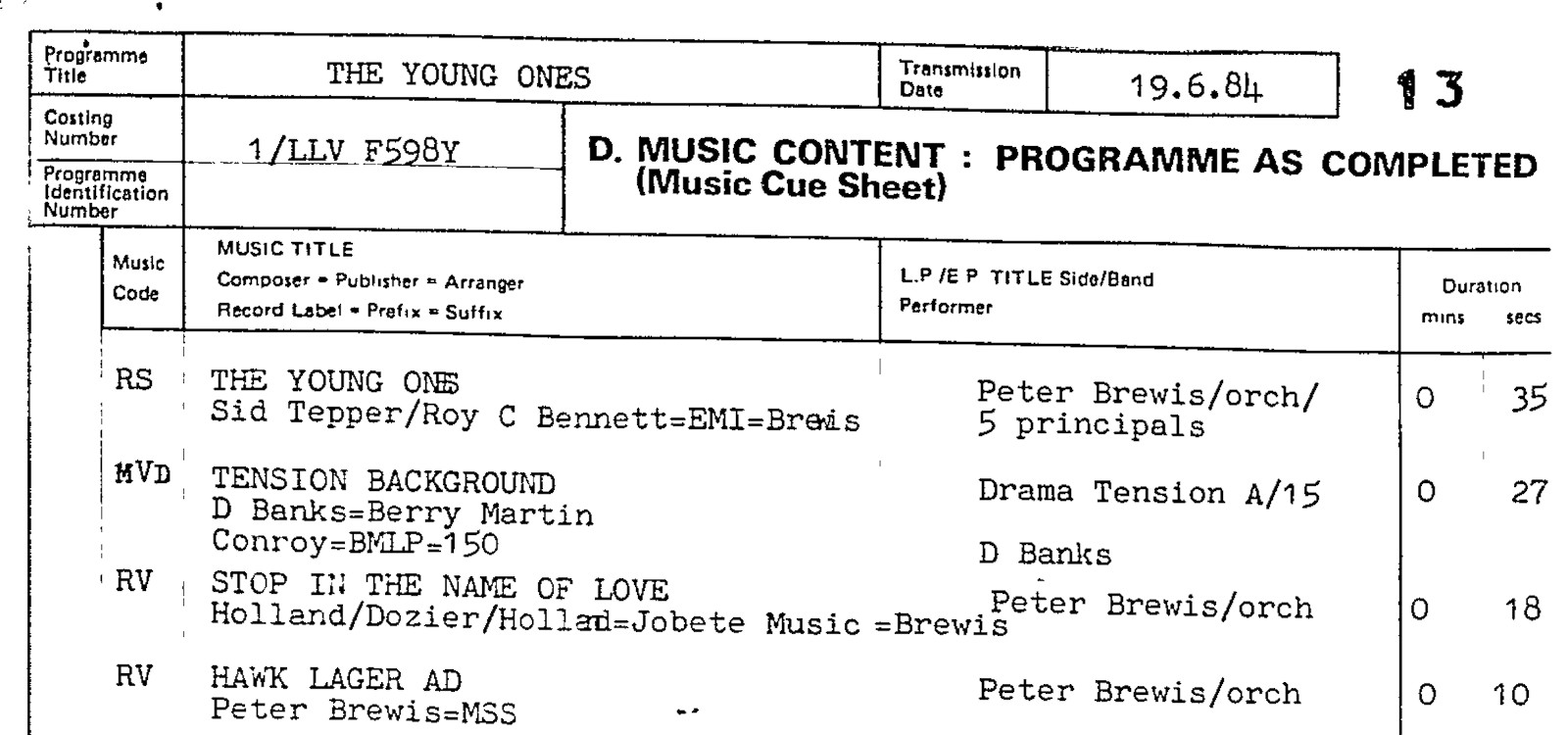
Back in June, I published the first part of my Young Ones Music Guide, detailing every single piece of music heard in Series 1 of The Young Ones. Some of you may be wondering why the second part is taking so long to appear.

By way of explanation, I have a tale for you today. It is a thrilling tale, tracing a piece of comedy history, full of twists and turns, with a stunning climax. It also features Gregorian chanting and incorrect paperwork, but don’t let that put you off.

Here is how complicated tracing the specific music used in television programmes can be.

[Read more →]

Read more about...

,

Condition: Red

Children's TV / TV Gameshows

Bomb room in Knightmare

It’s 1990, or something vaguely close to it. I’ve cleaned my teeth like a good boy, and am now running to my room. Something is going to get me, you see. I mean, I have a happy home life. So happy that my parents even make sure I clean my teeth. But right now, I’m in danger.

I barge into my bedroom, flinging the door open, and dive under the covers. I lie, panting. I strain my ears, but of course, everything is fine. As long as I’m under the covers, I’m safe.

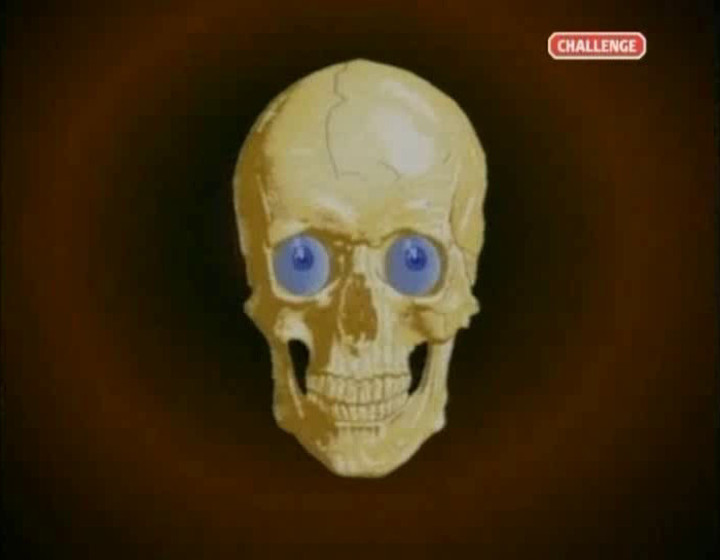
But I’d best not come out. I can see it in my head. A decomposing skull. It followed me into the room, and is now sitting against my bedroom wall. If I come out, it’ll zoom into my face and kill me.

It’s hot under the duvet. Far, far too hot. It’s the height of summer. Sweat covers my body. I do an experimental waft of the duvet to cool me down. It’s frightening enough – it gives the manifestation on my wall a moment of opportunity – but I get away with it. I drift into a fitful sleep. I might even dream about that… thing.

It’s just waiting for me, you know.

[Read more →]

Read more about...

,

That’s the Joke

TV Comedy

With all my WILD and CRAZY opinions, what do you think the most pushback I’ve ever had to something I’ve posted here on Dirty Feed? Saying something nice about That Puppet Game Show? Slagging off a beloved element of Animal Crossing? Posting BBC Micro porn in living colour? (Please believe me when I say that last link is genuinely NSFW.)

No. The most pushback I’ve ever had is when I said I agreed with John Cleese. No, not about those comments. About a perfectly innocuous Fawlty Towers joke. Specifically, the bit in “Gourmet Night”1, where Basil faints while trying to introduce the Twichens to the Halls.

MR. HALL: No, no, we still don’t know the name.
BASIL: Oh, Fawlty, Basil Fawlty.
MR. HALL: No, no, theirs!
BASIL: Oh, theirs! So sorry! I thought you meant yours! [maniacal laughter] My, it’s quite warm, isn’t it? I could do with a drink, too. So, another sherry?
MR. HALL: Aren’t you going to introduce us?
BASIL: Didn’t I?
MR. HALL: No!
BASIL: Oh, sorry. This is Mr and Mrs… [mumbles]
MR. HALL: What?
BASIL: Er, Mr and Mrs…

Basil faints.

For years, I thought the joke was that Basil simply forgot the Twitchens’ name – him having forgotten his own name in the previous scene. But no. John Cleese explains all in the DVD commentary:

CLEESE: Now, what’s interesting here is that one of the best-loved jokes in Fawlty Towers, which is Basil fainting, is I’m afraid totally misunderstood by everyone who’s ever seen it, because – it is entirely Connie’s and my fault – it’s not set up properly. When Basil faints because he cannot remember Mr. Twitchen’s name, it’s not actually because he can’t remember Mr. Twitchen’s name. He can – but he’s talking to a man whose head is constantly twitching… and he doesn’t like to say “this is Mr. Twitchen” to someone whose head is twitching because that might annoy that person. So that’s actually what the joke is.

Anyway, in this piece on those commentaries, I made the error of admitting that I had misunderstood the joke too. And despite John Cleese literally explaining that it was a bad joke because too many people misinterpreted it, I’ve never had more people hinting that I was a bit of a moron. Someone even called me a “dunce”. I can only hope that my subsequent work examining exactly what was reshot of the Fawlty Towers pilot, and a long investigation into an early incarnation of the show now absolves me of dunce status.

All this got me thinking recently. If I sat here detailing all the jokes in sitcoms I’ve misunderstood over the years, I’d be here all day. But one particular example has always stayed with me, because it took me an embarrassingly long time to figure out. And unlike the above example, it’s set up entirely correctly, and I should have no excuses.

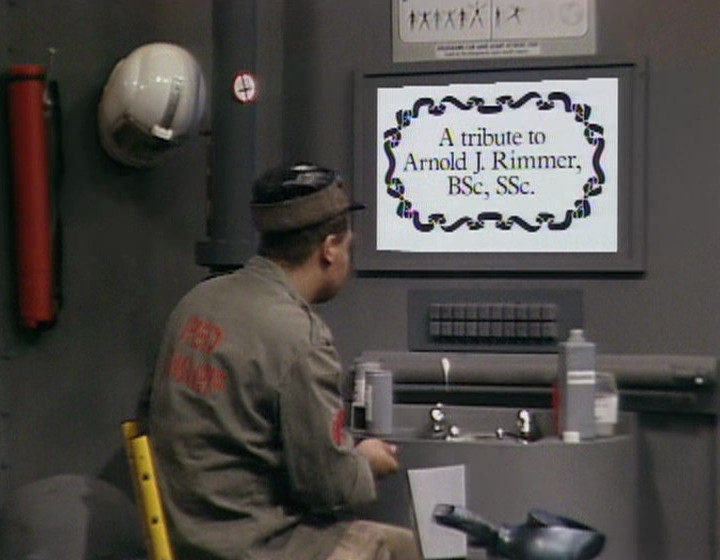
So let’s take a trip to Red Dwarf – specifically, “Kryten”, and learn about decimalised music2:

RIMMER: It’s because you’re bored, isn’t it? That’s why you’re both annoying me.
HOLLY: I’m not bored. I’ve had a really busy morning. I’ve devised a system to totally revolutionise music.
LISTER: Get out of town!
HOLLY: Yeah, I’ve decimalised it. Instead of the octave, it’s the decative. And I’ve invented two new notes: H and J.
LISTER: Hang on a minute. You can’t just invent new notes.
HOLLY: Well I have. Now it goes: Doh, ray, me, fah, soh, lah, woh, boh, ti, doh. Doh, ti, boh, woh, lah, soh, fah, me, ray, doh.
RIMMER: What are you drivelling about?
HOLLY: Hol Rock. It’ll be a whole new sound. All the instruments will be extra big to incorporate my two new notes. Triangles will have four sides. Piano keyboards the length of zebra crossings. Course, women will have to be banned from playing the cello.
LISTER: Holly: shut up.

For an embarrassingly long time, I didn’t understand that last cello joke. I first saw the episode in February 1994, when I was 12, and maybe I should have got it then. Regardless: I didn’t. I can’t remember exactly when I did, but it had clicked by 2007.

There’s an odd thing, when you’ve watched a sitcom from an early age. An age where you get the idea of the programme, and many of the jokes… but miss a few obvious ones along the way, as well. Because my mind has a tendency to get a little – for want of a better word – stuck. When watching the same show as an adult, I hear the words, but the joke isn’t always heard afresh. The result: a joke that you would have got if you were coming to it for the first time remains impenetrable, long after you should understand it.

Well, that’s my excuse, anyway, and I’m sticking to it. Leave me alone.


  1. “Gourmet Night” also contains perhaps the harshest and bleakest joke in the whole of Fawlty Towers. “How’s that lovely daughter of yours?” / “She’s dead.” Very rarely remarked upon amid the rest of Basil’s nonsense, but it’s properly horrific. 

  2. A joke that Grant Naylor used in various forms for years. 

Read more about...

,

The Spelling Machine

Other TV

Earlier this year, I wrote about how I traced down an early childhood TV memory. It seems to be quite the year for it, because blow me down, somebody’s helped me track down another one. And today’s story involves a certain Paul Daniels.

Not his famous Halloween stunt from 1987, which I have precisely zero memory of, and almost certainly never saw. (That’s the kind of thing which makes you feel cheated of a really good TV memory. Luckily, I fully remember Ghostwatch, five years later.) No, my memory of Paul Daniels is rather more low-key.

Although, like many of my early TV memories, it involves an explosion.

*   *   *

It’s around 1990, and I’m about nine years old. Could be a couple of years earlier or later. Paul Daniels is doing a card trick on the telly, as he is wont to do. But this is a slightly unusual card trick. Some kind of strange machine is spitting out cards at Paul. What is he doing – guessing which cards will come out? I can’t quite remember.

But something wrong. The machine keeps spitting out cards faster and faster. Paul is concerned, and tries to stop it. But it’s to no avail. The machine explodes, leaving Paul with a cartoon-like blackened face. He looks straight to camera, with a look of resignation, and throws the remaining cards away. End of routine.

I’m intrigued… and mildly disturbed. Electric things going wrong are already a slight fascination with me. I remember nothing of the rest of the show, but this one moment is seared into my memory. And I never saw it again.

*   *   *

Well, until now.

This is one of those memories where I made a few half-hearted searches over the years, but never made any serious effort. (There is a lot of Paul Daniels on YouTube.) I occasionally mentioned it, but had kind of resigned myself to never seeing it again.

Until I idly mentioned all this on Twitter… and hello, Timothy Roger Talbot came up with the goods. Here it is, from the very opening of the episode:

There are clearly many things I didn’t remember, or remembered wrongly – I’d even forgotten about the fundamental conceit of a “spelling machine”. But it came flooding back as soon as I watched it; this is definitely the programme in question. I got a Proustian rush when the cards came flying manically out of the machine, and when Daniels blows the flames out; images I couldn’t quite dredge from my head until now, but were clearly buried deep within my skull.

As for the routine itself, I’m the world’s worst person at figuring out magic tricks. From my exceedingly untrained eye, presumably the following is happening:

  • The cards Paul puts in the machine at the top are nothing to do with the rest of the trick, and are never seen again.
  • The dial at the front is pure misdirection, and also does nothing.
  • The pure power of suggestion gets the required words out of the audience member. The obvious rhyme for bow is “cow”, and the obvious rhyme for mouse is “house”.

It’s a fun piece of television, and certainly the kind of thing you don’t get much of on BBC One any more, unfortunately. Though let me extremely clear: the reason this particular routine stuck in my head is because it was something electrical which exploded, which I found faintly unnerving.

So, the final question: when exactly was this broadcast, and how old was I? The video says the show is from 1988, and luckily, BBC Genome made it very easy to track down the exact episode, as luckily it specifically mentions the spelling machine. Unfortunately, The Paul Daniels Show routinely got a repeat on BBC2 – which is, incidentally, where the video above comes from. So I either saw it on its original BBC1 showing on the 30th January 1988, or the BBC2 repeat on the 11th August 1988. Both these showings are earlier than I thought; I would have been aged 6 on the first showing, and 7 on the repeat. I’m slightly amazed that the memory still lingers.

I’m not going to end this post with “now that’s magic”, because I simply have too much respect for you.

Read more about...

“You’re in my way.”

Meta / TV Drama

Thanks to The Hollywood Reporter, for reminding me that back on the 18th June, it was the 30th anniversary of the Next Generation episode “The Best of Both Worlds”.

“From 1987 to 1989, the voyages of Captain Picard and the crew of the Enterprise-D struggled to be anything more than a passable background watch in its creatively-turbulent first and second seasons. (Season two’s “The Measure of a Man” and “Q Who?” being the lone must-watch exceptions.)”

I mean, everyone’s allowed an opinion, even if it is one of the most tedious Trek opinions I’ve seen for quite a while. I’m just going to vaguely point in the direction of “The Big Goodbye”, “11001001”, “Heart of Glory”, “Elementary Dear Data”, “A Matter of Honour”, and “The Emissary”, and fold my arms in annoyance.

“The episode also doesn’t get much credit for how satisfying it wraps up that storyline for Riker. By radically accepting that an extra rank pip on his collar doesn’t determine his status or worth, Riker makes the very emotionally-honest realization that lets him have an arc even though he’s staying put on the Enterprise bridge. (Piller’s script argues that one doesn’t need to move on or change jobs to evolve personally within their profession. Ironically, Piller would stay on the series as well, before leaving to help oversee Star Trek spinoffs Deep Space Nine and Voyager. The former wouldn’t exist without the storyline established by “Best of Both Worlds”, either.)”

How is that ironic? It’s literally the exact opposite. It would be ironic if Piller had written about how you can evolve personally within the same role, and then left the series anyway, but he didn’t.

OK, whatever, I’m bored with picking apart this article. The reason why I’m pleased to be reminded of this little anniversary is because it lets me be massively self-indulgent, yet again. Back in 2018, I wrote a little piece on here called “6 Times Your Favourite TV Shows Jumped the Shark”. A pisstake of clickbait journalism and the entire concept of jumping the shark itself, I have to admit it’s one of my favourite things I’ve ever written.

It was, however, not originally “6 Times”. In the first draft, it was 10. I’m sure you can already hear the joke wearing thin from here; halfway through the article, the idea just died. So acting on advice from someone used to script-editing comedy or something, I kicked four of the sections out the door. Those excised sections were on Blackadder II (“Bells”), Frasier (“The Ski Lodge”), Happy Days (Season 3, when they changed the theme tune), and… Star Trek: The Next Generation. Guess the episode?

And while the article was fifty times better with these sections deleted, I always had a soft spot for that last little section. My favourite parts of the article were the bits where I was teetering on the line between a bad-faith argument, and something that might be, sort of, valid. I think the below definitely manages that.

So, on the 30th anniversary of that famous episode, here’s a deleted scene from an old Dirty Feed article. I told you it was self-indulgent.

*   *   *

Star Trek: The Next Generation: The Best of Both Worlds

Locutus of Borg

The third season of TNG is often seen as the moment where the show really came into its own. And it’s true: once Michael Piller came on board, the show took enormous strides in almost every single area. Showpiece episodes like Yesterday’s Enterprise and Sins of the Father are the best remembered, but I’m especially fond of shows like The Offspring – quiet, character-based shows that are the lifeblood of the series.

And then, at the end of the season, the show blows it all away.

It’s difficult to count the number of things the Borgfest Best of Both Worlds gets wrong. There’s Borg expert Lieutenant Commander Shelby, forced into the show purely so Riker can worry about his career. Written by Piller, this pathetically reflected his own worries about whether to move on from the show or stay for a fourth season; possibly the most indulgent thing ever written for the whole of Star Trek. This perhaps wouldn’t matter so much if it worked in-universe, but the whole point of TNG was to show that Starfleet officers had moved beyond petty conflict. The famous “You’re in my way” speech is a betrayal of everything Gene Roddenberry stood for.

But I could deal with that, if the resulting show was entertaining. Sadly, it isn’t. The reason Q Who was so scary is that the Borg acted as one hive mind: relentless, unstoppable. To have Picard assimilated, and act as a Queen Bee figure for our crew to talk to kills off everything which is unique about the Borg. It reduces them to stock villans, indistinguishable from the Romulans except for a few tubes sticking out here and there. You can betray Roddenberry’s future, or destroy a great villain: but in doing both, the series doomed itself.

Season 4 started with a perfunctory resolution to the absurd cliffhanger, and then followed it up with the ludicrously self-indulgent Family, a show with no science fiction elements whatsoever, and thus not even remotely within TNG’s remit. I stopped watching, and I can’t imagine I was alone.

Read more about...