Home AboutArchivesBest Of Subscribe

“From Here?”

Film / TV Comedy

Over the years, I’ve written plenty about comedy writers reusing jokes. Today’s topic is one of the most famous and most-quoted examples of the lot.

So let’s turn to ersatz Bond film Never Say Never Again, which premiered in the US on the 6th October 1983. Oh dear, James Bond isn’t having much fun.

NURSE: Mr. Bond? I need a urine sample. If you could fill this beaker for me?
BOND: From here?

The tale surrounding this is well-known by now. Dick Clement and Ian La Frenais did some emergency rewrite work on Never Say Never Again, coming in three weeks after the film had started shooting, and staying with the production for three months.1 Of course, they nicked the above joke from their own Porridge, and both writers have openly and repeatedly discussed this.

For instance, in the Omnibus edition “Whatever Happened To Clement & La Frenais?”, broadcast on the 20th July 1997:

DICK CLEMENT: We’re always tempted to recycle jokes, We did use one… it’s not a similar joke, it’s the same joke, in Never Say Never Again as in Porridge. If you see them back-to-back, it’s quite amusing.
IAN LA FRENAIS: We call it homage. We don’t call it recycling. (laughs) But it doesn’t happen very often.

The joke was actually taken from the very first episode of Porridge2, “New Faces, Old Hands”, which first aired on 5th September 1974:

DOCTOR: You see those flasks over there? I want you to fill one for me.
FLETCH: What, from ‘ere?

For me, it’s the lightning-fast reaction from Barker which really sells it. He knew when you shouldn’t have time to anticipate the gag.

Obviously, this scene has become one of those clips over the years – if not quite rivalling Del Boy falling through the bar, then definitely in the ballpark. You do get to the point where at least as many people remember the clip from documentaries and anecdotes as they do from the actual show.

With that in mind, it’s worth noting at least one newspaper reviewer enjoyed the joke so much on first transmission, that they quoted it in their column the very next day. Peter Fiddick, in The Guardian:

“The jokes are there though both verbal and visual. (“I want you to fill that glass” says the prison doctor to Barker. “What – from here?” – and the camera cuts away from them precisely to emphasise the distance.)”3

So far, so standard. But the big question is: can we trace the joke back even further?

[Read more →]


  1. More than Likely: A Memoir (Weidenfeld & Nicholson, 2019). 

  2. Not including Seven of One‘s “Prisoner and Escort”, obviously. 

  3. Not a perfect quotation, sure, but in 1974 without the aid of home video, let’s not be too picky. 

Read more about...

,

Hayers to Sweep Away ‘Dead Wood’ at BBC

TV Comedy

The opening episode of the first series of I’m Alan Partridge, “A Room with an Alan”, was broadcast on the 3rd November 1997. What is the first thing we see Alan Partridge doing in his room at the Linton Travel Tavern?

Oh, the usual stuff. Some bad programme ideas. The first of many dream sequences. But the very first thing we see is him doing is reading a newspaper article about Tony Hayers… the person who is about to deny him his second series.

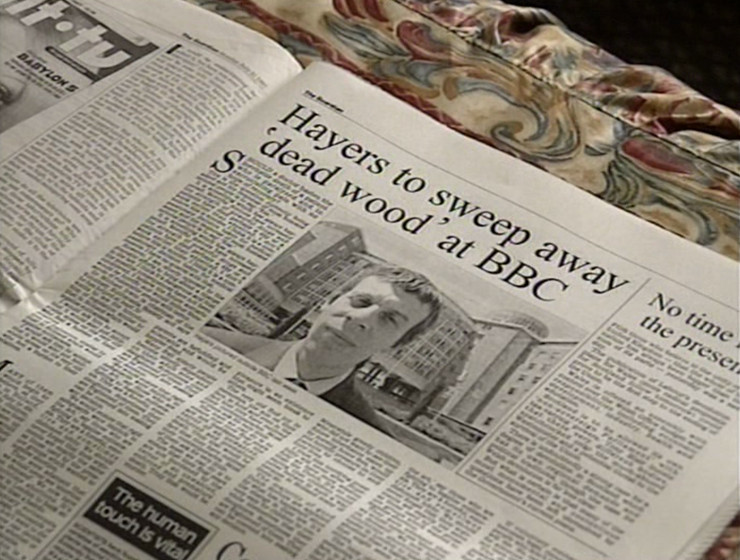
Close-up of article. Headline: Hayers to sweep away dead wood at BBC. On the left, there is a corner of a Cult TV front page.

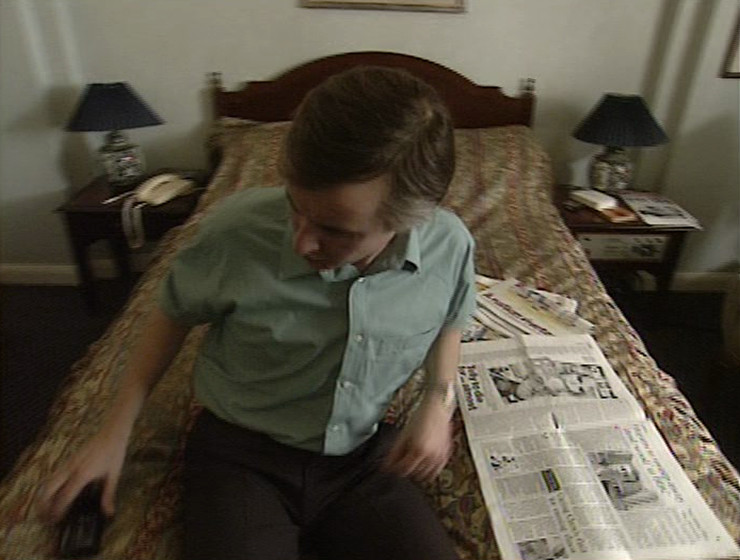
A wider shot of the two pages.

If you squint, the folio at the top of the first image identifies the paper as The Guardian. So let’s ask our usual question: which edition of the real paper did they modify, in order to create their prop with the fake Tony Hayers story?

[Read more →]

Read more about...

, ,

An Absolutely Fabulous Pilot, Part One

TV Comedy

Part One • Part Two

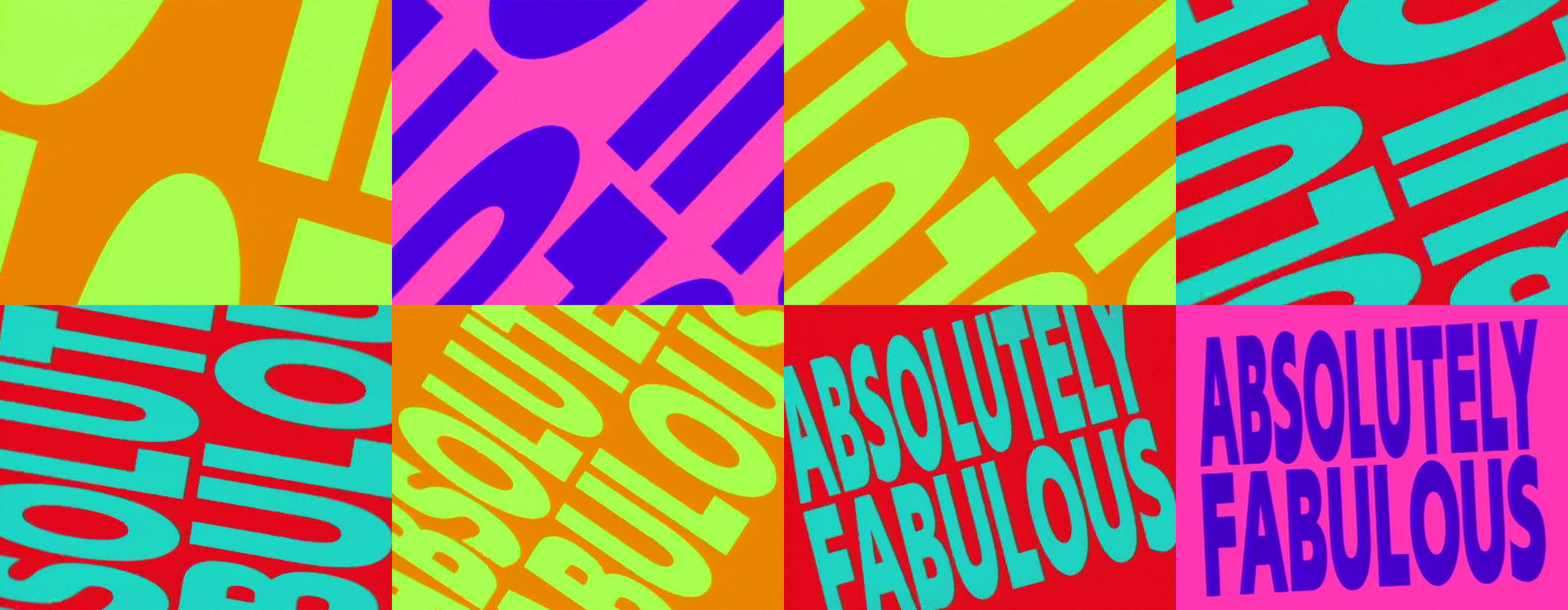
A 4x8 grid of the Series 1 title sequence - coloured letters rotating outward, of ABSOLUTELY FABULOUS

“The pilot show of a new sit-com about Edina, a neurotic, but successful woman who runs her own PR/design/fashion business and is obsessed with keeping up with the times. Her very sensible, teenage daughter Saffron lives with her and is forced into taking the mothering role. Edina is easily lead astray by her degenerate friend, Patsy, who is a magazine editor. Bubble is Edina’s secretary.

In this episode, Edina tries, unsuccessfully, to give up drinking.”

Original internal billing for the pilot

It’s sometimes hard not to compare Bottom and Absolutely Fabulous. Both grew out of the same group of Comic Strip and Young Ones writer-performers. Both capture what those performers were doing at the turn of the new decade. Both are audience sitcoms on the, shall we say, larger side of the acting stakes.1

And most importantly for today’s discussion, both originated from a one-off pilot recording, with a full series recorded the following year. Hey, you know me by now. I can’t resist a good list.

Absolutely Fabulous Series 1
Episode Studio RX TX
Pilot/Fashion2 27-28/6/91 12/11/92
Fat 18-19/2/92 19/11/92
France 25-26/2/92 26/11/92
Iso Tank 3-4/3/92 3/12/92
Magazine 17-18/3/92 10/12/92
Birthday 10-11/3/92 17/12/92

The pilot of Absolutely Fabulous had location material shot on the 18th and 19th June 1991. There was then a pre-record day in Studio 4 at TV Centre just over a week later on the 27th June, followed by a recording in front of a live audience on the 28th June. There was then a gap of over seven months before the rest of the series entered production.3 The pilot finally transmitted on the 12th November 1992… 18 months after it was initially recorded.

I have access to some of the paperwork for that pilot episode here, and if you squint at it, we can made some guesses as to what happened to the pilot in that 18 month gap. For instance, the following line is in a different font to the rest of the page, and was clearly typed later:

OPENING TITLES SPECIALLY SHOT ON BETA & transferred to D3

Some material related to the music is also in a different font:

Musicians for sig tune – Costed to 1/LLV Q731H – Recorded 24 3 924

Opening/Closing Music by SIMON BRINT

Perhaps unsurprisingly, the following is also clearly typed later:

FINAL EDIT BY CHRIS WADSWORTH on Spool No D632800

Why am I telling you all this? Because from the above, we can tell that in between the pilot being recorded, and its final transmission, the team must have added new opening titles, added new title music, and then amended the paperwork to include both. The version of the programme which eventually transmitted on BBC2 in 1992 was LLC/C521/73; the paperwork would have been originally prepared for the previous edit, LLC/C521/72. An edit which was never broadcast.

Well, never intentionally broadcast, anyway.

Because when UK Gold started showing Absolutely Fabulous, somebody had clearly been a little careless with the version of the pilot they sent over to them. The result: for years, they accidentally showed the /72 edit of the pilot, put together long before the rest of the series was finished. And while Gold finally corrected the error around 2017, I’ve recently got hold of what the channel repeatedly aired all those years ago.

Which means we can now take a little look at the pilot of Absolutely Fabulous in its 1991 incarnation, rather than its final 1992 broadcast.

[Read more →]


  1. Both were also made under the variety department rather than comedy, allowing them two days in the studio rather than one, making them feel rather more lavish than many other sitcoms. And all this without a band in sight

  2. The paperwork I have access to only calls the episode “Pilot”. The name “Fashion” for this episode first seems to have been used on the 1993 UK VHS release. 

  3. The next thing to be recorded for the programme was location material on the 5th February 1992

  4. I bet you’d like to know who played on the original Ab Fab version of “This Wheel’s On Fire”, wouldn’t you? Here you go: Dave Stewart (keyboards), Steve Pearce (bass guitar), Steve Sanger (drums), Roddy Matthews (guitar), and Simon Brint (keyboards). 

Read more about...

, ,

Absolutely Out of Order

TV Comedy

I don’t want much out of life, you know. I really don’t. Just the basics. Like, for example, knowing which episode of Absolutely Fabulous was broadcast on BBC2 on the 17th December 1992. The final programme of the very first run of the show. Is that really too much to ask?

Apparently, the answer is yes. Let’s track my attempts.

[Read more →]

Read more about...

, ,

Wyverns and Wherefores

TV Comedy

Series 1, Episode 7 of Marion & Geoff, first broadcast on the 7th November 2000, is different from every other episode in the first series of that show. How?

For the answer, let’s turn to the excellent DVD commentary, with Blick and Brydon.

HUGO BLICK: We’ve got to be honest with you, viewers. We structured nine episodes, we knew exactly where we were with nine episodes. What happens is, we sit in a room, we talk about the character, and Rob improvises, and I’m listening to what he’s doing. And I often go away, and kind of construct all his brilliant improvisations… and I get loads of material I can’t use, because the spine of the story takes it in a different direction.

So I thought ‘Well, let’s just leave one episode open, and put him into an area where he’s waiting for something to happen, and use all those lovely improvisations, to just put them in.’ And so we came up with this cunning device, that we would take you to a zoo. […]

ROB BRYDON: There are some great gags in this episode that I like.

HUGO BLICK: We just threw them in!

ROB BRYDON: But you also get a bit of history, you get a bit of backstory…

HUGO BLICK: Yeah, yeah, yeah… I was never casual about the whole construction. But it is remarkable, we just sewed them together. I remember saying ‘Right, try that one. Remember that one? Do that one.’

Which is very interesting, but far too much of a useful insight for Dirty Feed. What I really want to know is exciting stuff like: which exact safari park does Keith visit?

At first, the answer seems obvious enough. At the end of the episode as it appeared on first transmission, we get a shot of a sign. Wyvern Safari Park. Brilliant.
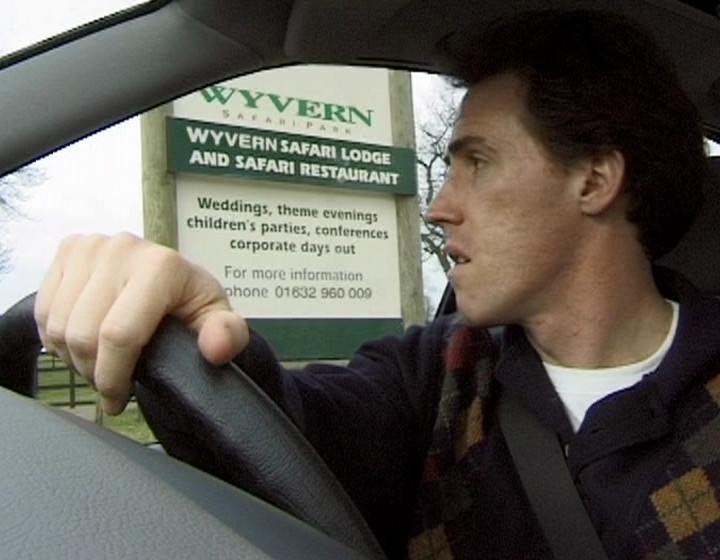
Keith, sitting outside a sign for Wyvern Safari Park

The only problem: Wyvern Safari Park doesn’t exist. I’m sure this is obvious to those of you who know your safari parks. I am not a safari park expert, and I had no idea. So like a fool, I went looking for Wyvern… and was mildly surprised when I couldn’t find it.

Luckily, the commentary track on the DVD reveals the answer:

HUGO BLICK: You will see at the very end that the place that we went to we stop outside, and it looks like a blatant kind of advertisement. It wasn’t, it was just where we stopped. The sign and the name is there. A large amount of this production budget was spent on airbrushing out the name of the real place, and it’s now called something else…. there we are. Wyvern.

ROB BRYDON: Is there no such place?

HUGO BLICK: I feel you might find that there isn’t.

With that knowledge in mind, it’s easy to tell that the sign has been altered in post-production. In fact, so easy, that I’m surprised I didn’t notice when I first watched it. The WYVERN in WYVERN SAFARI LODGE is too big and in the wrong font, and the phone number is in the wrong font as well.1 Indeed, the phone number 01632 960 009 is recommended by Ofcom for productions to use as a dummy number.

What the commentary track doesn’t reveal, however, is what the name of the real place was. It’s not too hard to work it out, though: the answer is clearly Woburn Safari Park, in Bedfordshire. The following photo, uploaded to Flickr in 2014, is clearly either the same sign, or an identical copy close by:
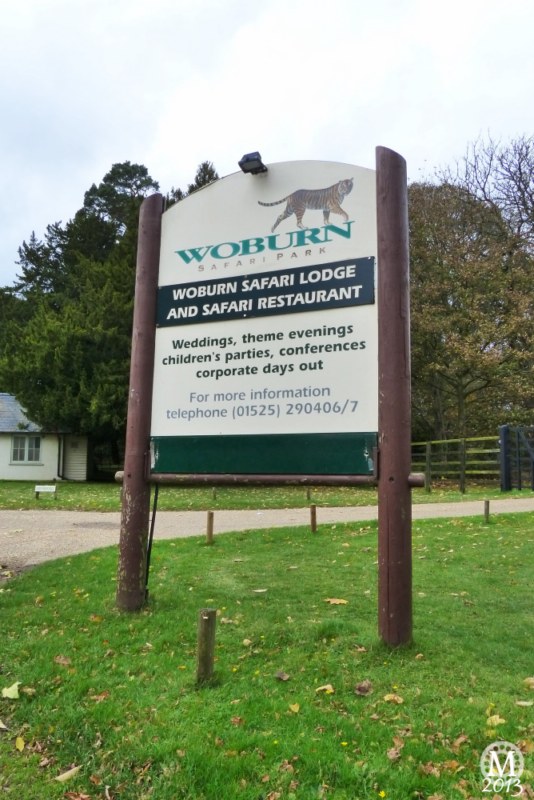
The original Woburn Safari Park sign

Woburn has had a rebrand since then, and a brand new logo; I highly suspect the above sign has been replaced by now. But if anybody wants to do some field research, by all means do so.

Still, it’d be nice to see the original shot of Keith driving past the Woburn sign, wouldn’t it?

[Read more →]


  1. To be fair, when Keith starts the car and the sign moves, they do an extremely good job at tracking the movement on the changed elements. Very well done for a TV show made in 2000. 

Read more about...

,

Girl on Film

TV Comedy

I really do love this set of episode reviews for Some Mothers Do ‘Ave ‘Em, by Steve Phillips. In a world where so much of the conversation around the show degenerates into variations of “It’s very funny” / “No it’s not”, it’s nice to have someone tackle each episode on its own merits, instead of throwing around generalities. And I very much include myself when it comes to the latter.

For instance, take Steve’s critique of the famous roller-skating sequence in “Father’s Clinic”, broadcast on 20th December 1973.

“The roller-skate ride is arguably Some Mother’s Do ‘Ave ‘Em‘s best-remembered set piece, but suffers from a clumsy change from film to videotape near the end as Frank crashes through the shop (how exactly do you roller-skate up stairs anyway?) The sequence is also slightly marred by jumpy cuts and sudden changes of location.”

As with most British sitcoms in 1973, Some Mothers Do ‘Ave ‘Em used videotape for its interiors, mostly shot in a studio in front of an audience, and 16mm film for its exteriors, played into the studio during the main recording in order to get the studio audience’s reaction. Personally, I don’t find the change from film to videotape as Frank enters the shop clumsy. In fact, I rather like it – it’s like Frank is crashing back into “reality” at the end of the sequence.1

But hey, judge for yourself:

There is, however, one instance of Some Mothers Do ‘Ave ‘Em cutting between film and video which I really do find horrendously awkward. The opening of “Jessica’s First Christmas”, broadcast on the 25th December 1974, is mainly VT material shot at Television Centre… but with inserts of baby Jessica, clearly shot on film:

If you read this scene in a particular way, as the film shots of Jessica are right next to the film panning across all the houses, it unintentionally looks like Jessica has been bunged outside in the dark by an uncaring Frank and Betty. Bastards.

[Read more →]


  1. Let’s try to ignore the fact that Crawford hit his head for real very hard indeed while shooting that scene in the studio. It makes it a little more difficult to watch once you know. 

Read more about...

,

A Slightly Larger Summer Party

TV Comedy

“We are aware that there will be those who say ‘What a shame to show us these characters’, but I would always rather be brave.”

Rob Brydon, The Sunday Telegraph, 2nd September 2001

“You’ve got to carry on swimming. I was really keen not to put this precious character of ours in a cul-de-sac where he only functions in a monologue.”

Hugo Blick, The Sunday Telegraph, 2nd September 2001

A Small Summer Party [is] entirely unnecessary. In advance, this was billed as our chance to “find out how the Marion and Geoff story began”. The trouble was that we already knew.”

James Walton, The Daily Telegraph, 4th September 2001

A Small Summer Party, broadcast on the 3rd September 2001, remains a controversial entry into the Marion & Geoff1 universe. A retelling of that fateful summer barbecue where Keith’s life finally falls apart, I can’t say I really understand complaints that the episode was pointless, simply because we already knew what had happened. I don’t see sitcom as a content-delivery mechanism for plot.

I do have a bit more sympathy with James Walton’s other issues with the show:

“It was in episode six of the original series that Keith (Rob Brydon), speaking more quickly and nervously than usual, told us about the day when it finally became undeniably apparent that his wife was unfaithful and his marriage was finished… As ever, we had to do a bit of thinking to figure out from Keith’s version precisely what had happened – but, as ever, this only made the effect more powerful. Which may be why that 10-minute monologue managed to be funnier, sadder, subtler, and more dramatic than yesterday’s 50-minute fleshing out of the events Keith had described.”

As evidenced by Rob Brydon and Hugo Blick’s comments which opened this article, this is exactly what they were worried about when it came to making A Small Summer Party… and decided it was worth the risk. It’s a risk which I personally think comes off, despite entirely understanding why people fell in love with the monologues. I just think A Small Summer Party has more than enough of interest going on in its own right.

I admit that my favourite thing about the show is fairly obvious: how it plays as a found footage horror movie. A suburban Blair Witch Project, which was a film still relatively fresh in the memory back in 2001. But this surely wasn’t just some clever-clever directorial flourish; framing the show like this was far from an arbitrary choice. To Keith, this really is a horror film: the most horrific day of his life. And to most of the audience watching, this kind of domestic horror is far more likely to be a part of their lives than encountering evil spirits… or even an axe murderer.

A glowering, indistinct Marion in the kitchen doorway

A successful piece of television or not, one thing is true: A Small Summer Party has barely been repeated on the Beeb. It got a couple of BBC Choice showings the week after first transmission, and then nothing. Three years later in 2004, it did get a DVD release as part of Series 2… but not in its originally-seen broadcast version. Instead, it was an extended edit – specifically labelled as a Director’s Cut – increasing the 50-minute special up to a full hour.

Which is perhaps a bit of an strange choice. Even if you enjoyed the show, it was surely long enough in its 50-minute form, if not a little too long. It’s at times like this that you wish the release had a commentary, so we could hear all of Blick’s reasoning. As it is, we’ll have to prod the show ourselves.

You know the drill by now. Let’s take a look at every single difference between the broadcast version of A Small Summer Party, and the extended DVD edit. All timings given are for the broadcast edit, which is also available on iPlayer.

[Read more →]


  1. Marion & Geoff, or Marion and Geoff? I’m going for Marion & Geoff unless I’m quoting someone else, because that’s what it’s called on the show’s title card. Bite me. 

Read more about...

,

Looking for Lise

TV Comedy

The Young Ones was written by Ben Elton, Rik Mayall, and Lise Mayer, with additional material by Alexei Sayle. One of those names is not like the others.

After all, Ben Elton shows up on-screen in a surprising number of episodes: five, to be exact.1 Alexei Sayle appears in every single episode, mostly as various offshoots of the Balowski Family. And if you don’t know who Rik Mayall played, then please stop reading this article. But what about Lise Mayer? Surely she shows up in at least one episode?

Certainly, the Comedy Connections episode on The Young Ones, broadcast on the 18th July 2006, seems to think so. Take a look at this linking sequence:

[Read more →]


  1. Baz in “Demolition”, the DJ in “Flood”, Kendal Mintcake in “Bambi”, a Grange Hill student in “Sick”, and the man in the Hawk Lager ad in “Summer Holiday”. Five episodes… but at least six roles, because he also plays the cat in “Flood”. “My wife, she’s a terrible cook, though. Well she would be – she’s dead!”

    Can anyone think of any other voice-only roles he had in the series? 

Read more about...

, ,

The Voice of Youth

TV Comedy

It somehow seems fitting that the very first thing recorded in studio for The Young Ones was one of its most well-remembered sketches. On the 23rd January 1982 at 7:30pm, without a studio audience – it was played in for their reaction the following night – Nozin’ Aroun’ was put in front of the cameras.

“Well, I’m standing up here on this scaffolding because that’s what this programme is all about – shock.”

The inspirations for Nozin’ Aroun’ are clear: a parody of TV “for young adults, made by young adults”, most obviously Something Else (1978-82) and the Oxford Road Show (1981-85). The latter is often mentioned in connection to The Young Ones, as Ben Elton made several appearances on it. A person contributing to the real thing… and also doing a parody of it. The link is irresistible.

Irresistible… and yet often slightly confused, especially when it comes to the chronology. For instance, BFI Screenonline tells the following story:

“But by the late 1980s Elton had decisively emerged from behind the typewriter. Although he had had some onscreen experience (even parodying his Oxford Road Show appearances in The Young Ones‘ mock youth TV programme Nozin’ Aroun’), it wasn’t until he became the regular host of Channel 4’s alternative comedy variety show Saturday Live (1985-87) and its successor Friday Night Live (1988) that his face became as famous as his scripts.”

So the Oxford Road Show appearances came first, and then The Young Ones. And yet on the DVD commentary for “Demolition”, the Young Ones pilot, with Paul Jackson and Geoff Posner1, we get:

PAUL JACKSON: Funnily enough, he [Ben Elton] went on to present the Oxford Road Show of which this is in fact a parody.
GEOFF POSNER: Absolutely. Oxford Road Show used to be a sort of youth show, done from Manchester, Oxford Road studios in Manchester, and he ended up sending himself up.
PAUL JACKSON: And then, having sent himself up, presenting the show.

Jackson and Posner seem to be talking at cross-purposes here; Jackson thinks The Young Ones came before Ben’s Oxford Road Show work, while Posner seems to think it came afterwards. It’s all a bit confusing. After all, how can you send yourself up in this fashion before you’ve appeared on the real show?

Still, the idea that Ben is directly making fun of his own work in Nozin’ Aroun’ is a fun one. It’s not difficult to imagine the thought process here, once you’ve disentangled the temporal confusion. Ben did some embarrassing early appearances on the Oxford Road Show, finally got a show of his own, and used it to mercilessly take the piss out of how awful he was on it. Or at the very least, how awful everybody was around him.

The truth is altogether more interesting.

[Read more →]


  1. Paul Jackson produced the pilot, so is an obvious choice for this commentary. Posner is perhaps slightly odd; he only joined the production for the rest of Series 1, as Associate Producer/Director. But we do get the story of Posner overhearing Jackson editing the pilot of The Young Ones deep within the bowels of the BBC, which probably makes it worth it. 

Read more about...

,

Initiate Computer Search

TV Comedy

For reasons which will become apparent later in the year, I’m currently buried in research on Three of a Kind. It’s a show which I entirely dismissed a few years back on the strength – or otherwise – of its first episode, but now feel a certain amount of affection for. In fact, rarely has a comedy won me over so much from such a bad first impression.1

Fittingly, there were three series of Three of a Kind; the first started transmission in July 1981, the second in November 1982, and the third in September 1983. Also made as part of that final series was a Bank Holiday Special, which aired before the rest of the series, on the 2nd May 1983. It’s the usual mix of stuff that works and stuff which really doesn’t, with the highlight being a eight-minute “Cabaret” sequence near the end.

I’m particularly fond of Gladys Nightly, which is essentially Lenny Henry doing a proper drag act, and features a bonus cameo from Peter Brewis:

That split screen shot near the end of that sequence with the two Lennys is worth any amount of teletext graphics thrown at the screen.

[Read more →]


  1. I blame Gagfax, but that’s a whole other article. 

Read more about...

, ,