Home AboutArchivesBest Of Subscribe

“Of Course There’s Too Much Duck!”

TV Comedy

Assumptions are the enemy of research everywhere. Beware of anything which is “obviously” true. You can find yourself in a whole world of trouble.

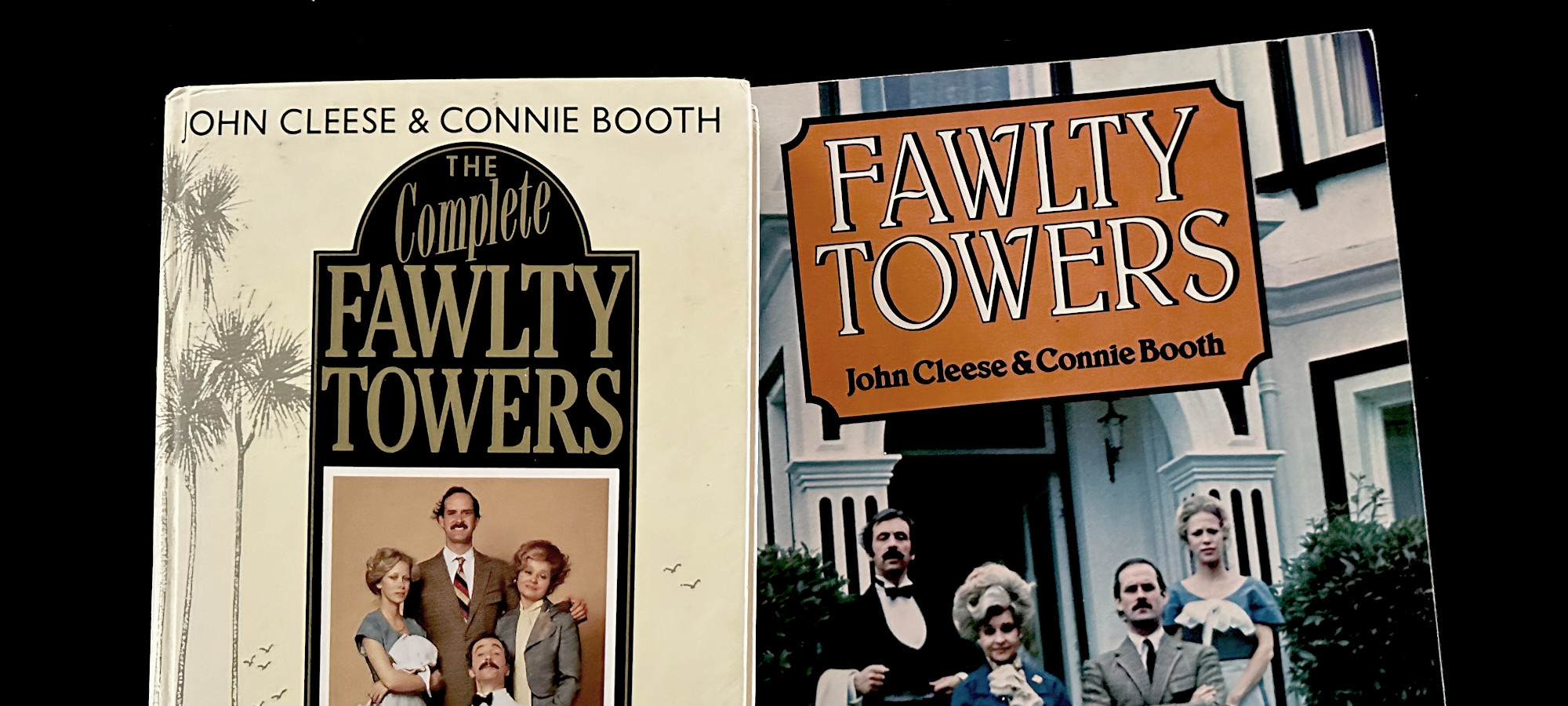
For instance, take the two Fawlty Towers script books below.

Two Fawlty Towers scriptbooks - all relevant information in the article

For years, I owned the one on the left, The Complete Fawlty Towers (Guild Publishing, 1989), which contains the scripts for all 12 episodes. I never bothered getting the one on the right, simply called Fawlty Towers (Contact Publications, 1977), because despite only covering three episodes1 – “The Builders”, “The Hotel Inspectors”, and “Gourmet Night” – the actual content was going to be identical, right?

[Read more →]


  1. A “Book 2” published in 1979 covers the rest of Series 1. Series 2 was never published in this form, and had to wait for The Complete Fawlty Towers to make it onto the shelves. 

Read more about...

, ,

“Faulty? What’s Wrong with Him?”

TV Comedy

You know those famous old misquotes, don’t you?

“Beam me up Scotty” was never said in original Star Trek. “Play it again, Sam” was never said in Casablanca. Or how about my least favourite example: “Don’t tell him your name, Pike” is not the actual line in Dad’s Army. A sentence which is so lacking in comic rhythm that I could punch somebody… so obviously, it had to be plastered in large letters inside the audience foyer of New Broadcasting House.1

This article is about another misquote. But unusually, it’s about a very recent misquote. One which we can see spreading before our very eyes.

So let’s take a look at this article in the Metro on the best Basil Fawlty lines in Fawlty Towers, published February 2018. I have to be honest: it is not an especially good article. I don’t plan to eviscerate it; I will leave that fun as an exercise for the reader, if you so desire.2 I merely want to point you all towards the very first quote that the article gives as an example of Basil at his best:

“For someone called Manuel, you’re looking terribly ill…”

Here’s the thing. That line doesn’t appear in any of the 12 episodes of Fawlty Towers.

[Read more →]


  1. For more of the same see this TV Tropes entry – with the usual health warning that TV Tropes requires. 

  2. “Irish man” is a good place to start, though. 

Read more about...

,

That’s the Joke

TV Comedy

With all my WILD and CRAZY opinions, what do you think the most pushback I’ve ever had to something I’ve posted here on Dirty Feed? Saying something nice about That Puppet Game Show? Slagging off a beloved element of Animal Crossing? Posting BBC Micro porn in living colour? (Please believe me when I say that last link is genuinely NSFW.)

No. The most pushback I’ve ever had is when I said I agreed with John Cleese. No, not about those comments. About a perfectly innocuous Fawlty Towers joke. Specifically, the bit in “Gourmet Night”1, where Basil faints while trying to introduce the Twichens to the Halls.

MR. HALL: No, no, we still don’t know the name.
BASIL: Oh, Fawlty, Basil Fawlty.
MR. HALL: No, no, theirs!
BASIL: Oh, theirs! So sorry! I thought you meant yours! [maniacal laughter] My, it’s quite warm, isn’t it? I could do with a drink, too. So, another sherry?
MR. HALL: Aren’t you going to introduce us?
BASIL: Didn’t I?
MR. HALL: No!
BASIL: Oh, sorry. This is Mr and Mrs… [mumbles]
MR. HALL: What?
BASIL: Er, Mr and Mrs…

Basil faints.

For years, I thought the joke was that Basil simply forgot the Twitchens’ name – him having forgotten his own name in the previous scene. But no. John Cleese explains all in the DVD commentary:

CLEESE: Now, what’s interesting here is that one of the best-loved jokes in Fawlty Towers, which is Basil fainting, is I’m afraid totally misunderstood by everyone who’s ever seen it, because – it is entirely Connie’s and my fault – it’s not set up properly. When Basil faints because he cannot remember Mr. Twitchen’s name, it’s not actually because he can’t remember Mr. Twitchen’s name. He can – but he’s talking to a man whose head is constantly twitching… and he doesn’t like to say “this is Mr. Twitchen” to someone whose head is twitching because that might annoy that person. So that’s actually what the joke is.

Anyway, in this piece on those commentaries, I made the error of admitting that I had misunderstood the joke too. And despite John Cleese literally explaining that it was a bad joke because too many people misinterpreted it, I’ve never had more people hinting that I was a bit of a moron. Someone even called me a “dunce”. I can only hope that my subsequent work examining exactly what was reshot of the Fawlty Towers pilot, and a long investigation into an early incarnation of the show now absolves me of dunce status.

All this got me thinking recently. If I sat here detailing all the jokes in sitcoms I’ve misunderstood over the years, I’d be here all day. But one particular example has always stayed with me, because it took me an embarrassingly long time to figure out. And unlike the above example, it’s set up entirely correctly, and I should have no excuses.

So let’s take a trip to Red Dwarf – specifically, “Kryten”, and learn about decimalised music2:

RIMMER: It’s because you’re bored, isn’t it? That’s why you’re both annoying me.
HOLLY: I’m not bored. I’ve had a really busy morning. I’ve devised a system to totally revolutionise music.
LISTER: Get out of town!
HOLLY: Yeah, I’ve decimalised it. Instead of the octave, it’s the decative. And I’ve invented two new notes: H and J.
LISTER: Hang on a minute. You can’t just invent new notes.
HOLLY: Well I have. Now it goes: Doh, ray, me, fah, soh, lah, woh, boh, ti, doh. Doh, ti, boh, woh, lah, soh, fah, me, ray, doh.
RIMMER: What are you drivelling about?
HOLLY: Hol Rock. It’ll be a whole new sound. All the instruments will be extra big to incorporate my two new notes. Triangles will have four sides. Piano keyboards the length of zebra crossings. Course, women will have to be banned from playing the cello.
LISTER: Holly: shut up.

For an embarrassingly long time, I didn’t understand that last cello joke. I first saw the episode in February 1994, when I was 12, and maybe I should have got it then. Regardless: I didn’t. I can’t remember exactly when I did, but it had clicked by 2007.

There’s an odd thing, when you’ve watched a sitcom from an early age. An age where you get the idea of the programme, and many of the jokes… but miss a few obvious ones along the way, as well. Because my mind has a tendency to get a little – for want of a better word – stuck. When watching the same show as an adult, I hear the words, but the joke isn’t always heard afresh. The result: a joke that you would have got if you were coming to it for the first time remains impenetrable, long after you should understand it.

Well, that’s my excuse, anyway, and I’m sticking to it. Leave me alone.


  1. “Gourmet Night” also contains perhaps the harshest and bleakest joke in the whole of Fawlty Towers. “How’s that lovely daughter of yours?” / “She’s dead.” Very rarely remarked upon amid the rest of Basil’s nonsense, but it’s properly horrific. 

  2. A joke that Grant Naylor used in various forms for years. 

Read more about...

,

“Two dead, twenty-five to go…”

TV Comedy

Last year, I took a look at the origin story of Fawlty Towers, and poked at it with an extremely large stick. I like poking stock opinions and anecdotes with extremely large sticks. It makes me very excited.

So, let’s do it again – although don’t worry, I promise this one won’t take four damn articles. This time round, we’re going to examine the inspiration behind the episode “The Kipper and the Corpse”; a story often told by Cleese. The most complete version I’ve found is in Morris Bright and Robert Ross’s book Fawlty Towers: Fully Booked, where Cleese is quoted as follows:

“A restaurateur by the name of Andrew Leeman was a great friend of mine and one day I asked him, “What’s the worst problem you had when you used to work at the Savoy Hotel?” Quite straight-faced he replied, “oh, the stiffs.” I said, “the what?” and he continued, “getting rid of the stiffs. The old dears knew the Savoy would always treat them really well, so they would check in with a bottle of pills, take them in the night, and in the morning the Savoy staff would walk in, pick up the phone and say, ‘We’ve got another one.’ Then the problem was getting the stiffs into the service elevator without alarming the other guests.” Well, I mean to say, once you’ve been given that as an idea, it’s just wonderful. And then you put a doctor in the hotel and it’s kind of a joy. Those ideas just write themselves. In fact, we called the dead body Mr Leeman in Andrew’s honour.”

Fawlty Towers: Fully Booked, p. 178

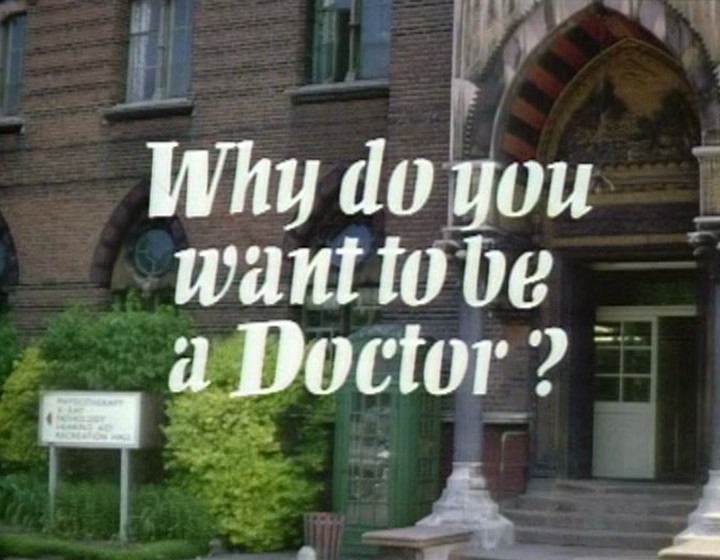
I have absolutely no doubt that the above is entirely true. I do not come to entirely bury this anecdote. I merely come to add some context. And that context leads – yet again – towards ITV medical sitcom Doctor in the House. Specifically, to the pilot, “Why do you want to be a Doctor?”, which Cleese wrote with Graham Chapman in 1969, a full decade before the second series of Fawlty Towers.

Why do you want to be a Doctor? title card
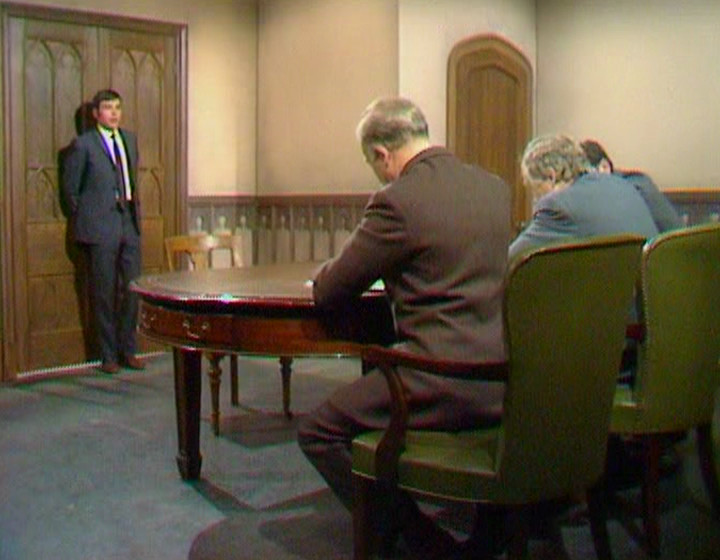
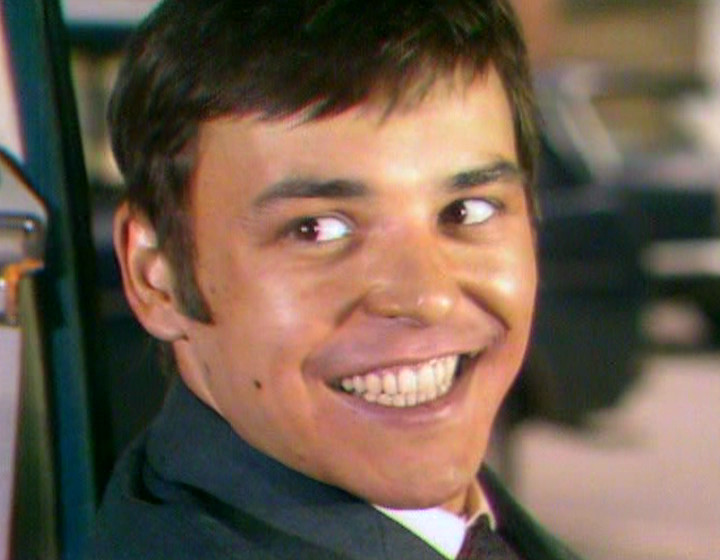
Upton entering the interview room

That pilot has a number of interesting things about it. From a writing point of view, Graham Chapman’s medical background was vital; a number of things in this episode turn up as tales in A Liar’s Autobiography, for instance. For me, the highlight of the episode is Upton’s horrifically awkward entrance interview for St Swithin’s:

Upton walks into the interview room. Three figures sit behind the desk. They ignore him.

UPTON: Good morning.

They continue to ignore him. Upton clears his throat and tries again.

UPTON: Good morning.

He realises, and closes his eyes.

UPTON: …afternoon.

From a technical point of view, the episode is notable for some extremely early colour OB work, rather than the usual film inserts. Indeed, the location sequences have a certain, shall we say, experimental feel to them. The series would stay with VT for its location scenes until Episode 10, “The Rocky Mountain Spotted Fever Casino”, where it switched to film for good.1

Michael Upton, on VT
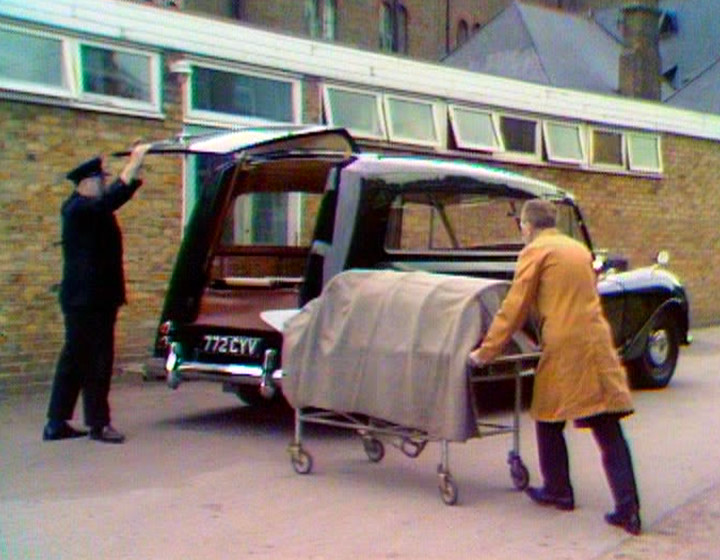
A dead body being wheeled out of the hospital, on VT

On the subject of this location work, it’s notable that one of the very first things we see in the pilot is a dead body being wheeled out of the hospital. This show is not fucking about.

The pilot is interestingly structured; Part One before the break is all about Upton’s entrance interview, and Part Two is set months later, on his first day actually enrolled at St Swithin’s. And after a pathetic pep talk from the Dean, and a terrifying pep talk from Professor Loftus, we come to the gruesome finale of the episode, where Upton and his friend Duncan Waring are sent to the Preparation Room.

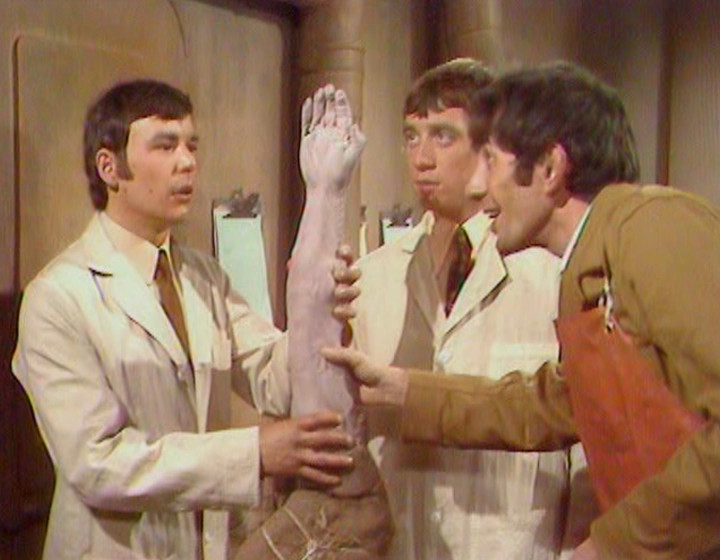
There, they meet the friendly Stebbings, who gives them an arm to dissect. An actual, real, arm.2

UPTON: Could we have the bag?
STEBBINGS: This is an anatomy school, not a supermarket.
UPTON: Where do we take it?
STEBBINGS: Dissection Room, Table 1. Keep the bones, but put the meat in the bin at the back.

Stebbings handing Upton an arm
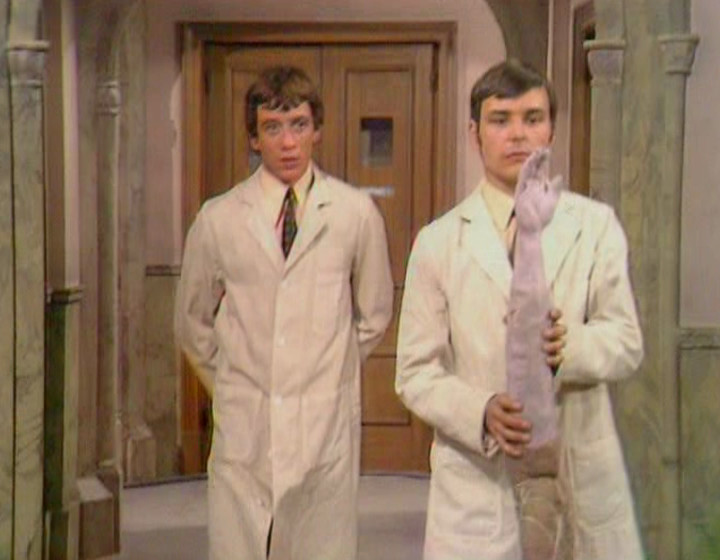
Upton wandering down the corridor with the arm

Unfortunately, Upton and Waring get lost on the way to the Dissection Room. And as they accidentally wander into an antenatal class carrying the arm and cause a scene, you may begin to get more than a whiff of “The Kipper and the Corpse”, so to speak. There is an obvious parallel between Basil and Manuel trying to hide a dead body, and Upton and Waring trying to hide a disembodied arm. Still, I probably wouldn’t have bothered writing about all this if it hadn’t been for what follows.

Because in a panic, Upton and Waring go through a door, and find themselves in the street. As luck would have it, they run straight into a policeman, because of course they do.3 And when the policeman gets suspicious about exactly what’s hidden under their white coats, and goes to investigate it, he faints… and we get a striking visual which would be exactly replicated in Fawlty Towers ten years later:
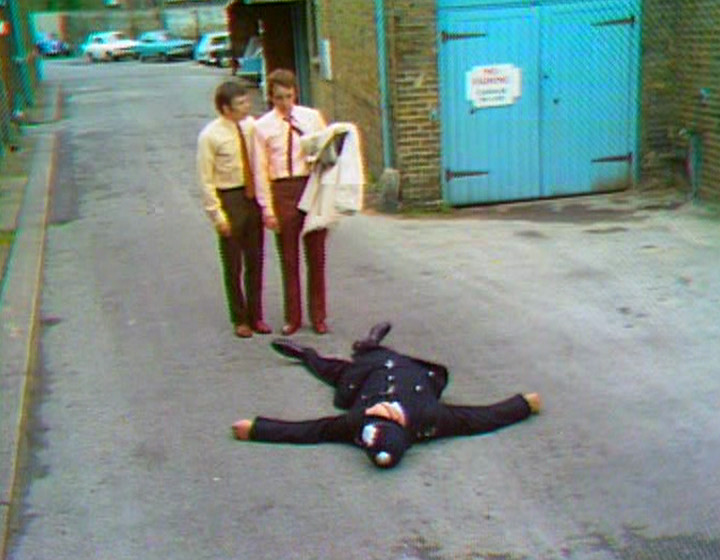
A policeman lying prostrate on the floor

Why Do You Want to be a Doctor?

Miss Tibbs lying prostrate on the floor

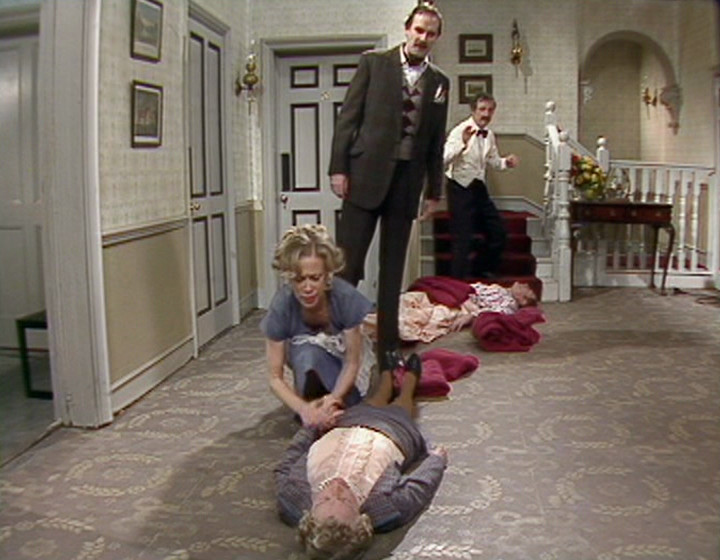
The Kipper and the Corpse

And there we have it: an early version of some of the gags in “The Kipper and the Corpse”, a whole decade earlier than they appeared in Fawlty Towers. And proof that while John Cleese may well have been inspired by his friend who worked at the Savoy, some of the ideas in the episode had been swirling around his head long before he heard about dead bodies being smuggled out of hotels. So many different things feed into the creative process; it’s always worth remembering that a single anecdote is unlikely to be the whole story, no matter how much fun that anecdote is.

It’s also proof that there are still new things to be discovered about Fawlty Towers in 2020. You just have to know where to look for them.


  1. This colour OB work is so early, in fact, that despite being made in colour, all of Series 1 of Doctor in the House originally transmitted in black and white. Colour only came to ITV in November 1969, and even then, not all of ITV. 

  2. Well, actually, a bit of a dodgy prop. But a realistic arm might have been a little too much for the studio audience. They’re slightly unnerved as it is. 

  3. You have to allow sitcoms to get away with stuff like this. I once pinched my girlfriend’s bum while she was bending over in the car, and she accidentally honked the car horn. These things do happen. 

Read more about...

,

Fawlty at Large, Part Four:
“Why did you laugh if you don’t understand it?”

TV Comedy

Part OnePart TwoPart ThreePart Four

LWT logo

In the penultimate part of this series, we examined the full wrath of John Cleese. Today, to round things up, I want to investigate his softer side. The softer side that nonetheless involves a sharp jab at his fellow professionals, because this is John Cleese: the man who deliberately broadcast David Frost’s telephone number to the nation because he thought it was funny.

And a character like Mr. Davidson – someone who is the embodiment of anti-comedy – is the perfect vehicle Cleese can use to slag off some lazy jokes.

[Read more →]

Read more about...

, , ,

Fawlty at Large, Part Three:
“He doesn’t know when to stop, does he?”

TV Comedy

Part OnePart TwoPart Three • Part Four

Mr. Davidson and Collier

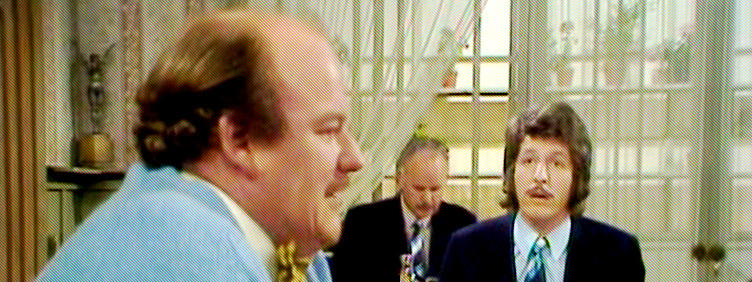
Last time in our analysis of No Ill Feeling!, we took an in-depth look at Dr. Upton’s nemesis, Mr. Davidson. We are now heading towards our final showdown with that particular fragment of humanity.

It is utterly glorious. It is also utterly savage, in a way that you might not expect from a 1971 LWT sitcom. And it’s something which seems to have been pretty much ignored by everyone in their analysis of the episode – in as much as the episode has had any analysis, beyond “look, there’s an early version of Basil”.

[Read more →]

Read more about...

, , ,

Fawlty at Large, Part Two: “Join in the fun!”

TV Comedy

Part OnePart Two • Part ThreePart Four

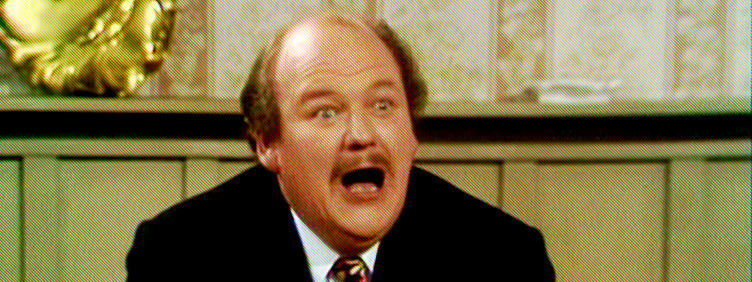
Mr. Davidson

In Part One of this series, we took a trip to 1971 and Doctor at Large, where newly-qualified doctor Michael Upton went to stay at the Bella Vista hotel. There, he met Mr. Clifford, our ersatz Basil Fawlty, and had a fairly baffling time with him.

That’s where most analysis of the episode No Ill Feeling! ends. But to me, it’s really just the beginning. Today, we meet the real nemesis of Michael Upton… and John Cleese.

[Read more →]

Read more about...

, , ,

Fawlty at Large, Part One: “Did you book a sprout?”

TV Comedy

Part One • Part TwoPart ThreePart Four

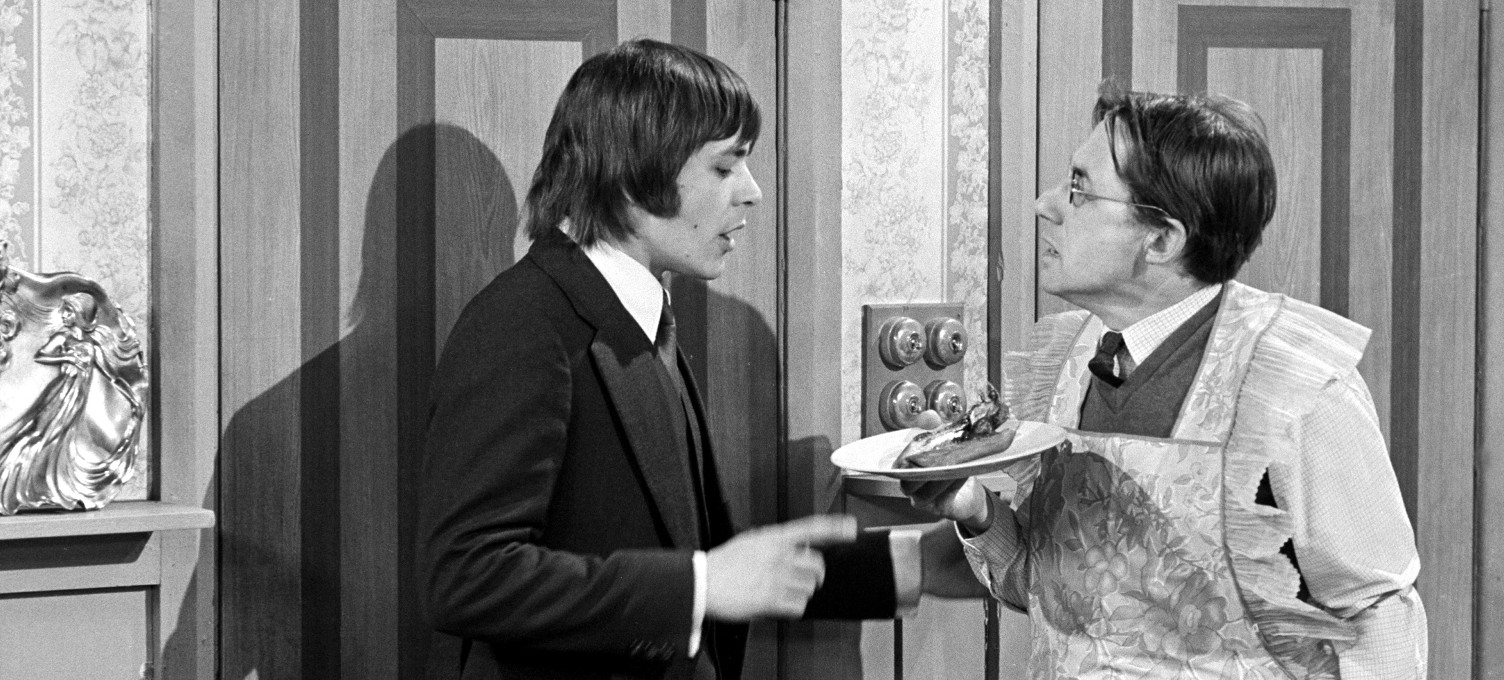
Doctor Upton and Mr. Clifford, from Doctor At Large

There is a tendency, when talking about TV shows, to get caught up in the same old anecdotes and stock opinions.

Star Trek: The Next Generation only got good with Season 3. Panorama was briefly interesting in 1957 with its spaghetti harvest April Fools, and again that time when Dimbleby sat there like a twat when no films would run. Catchphrase is reduced to Mr. Chips having a wank next to a snake.

It’s the same with sitcoms. Hancock is all about armfuls of blood and reading off cue cards. Are You Being Served? is entirely centred on Mrs. Slocombe’s minge. The Office invented a whole new way of making comedy.1 So it is with Fawlty Towers, which has its own set of anecdotes and origin stories, all endlessly repeated over the years until nobody bothers to question them.

So let’s question one of them, shall we?

[Read more →]


  1. It didn’t. 

Read more about...

, , ,

Fawlty Towers: A Touch of Class

TV Comedy

Fawlty Towers sign from pilot episode

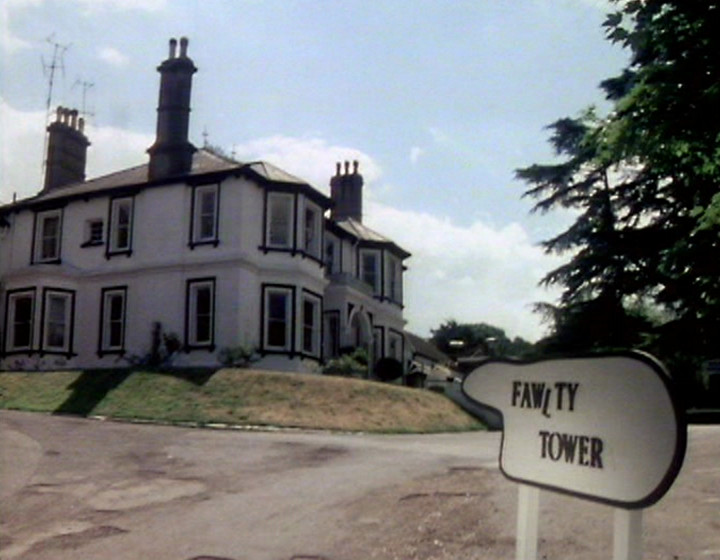
19th September 1975, 9pm, BBC2, and the first programme of a little series called Fawlty Towers is broadcast. And whilst most of that first series of Fawlty Towers was shot in the summer of 1975, the very first episode – A Touch of Class – was recorded eight months earlier, in December 1974. The reason for this is simple: that first programme was a pilot. Unlike some programmes, which are re-recorded entirely for their first episode1, most of that pilot made it to air more or less in its original form. For instance, the opening sign is a different design in the pilot episode compared to every single other programme in the first series, and the theme music is also a different recording. Indeed, you wonder why, when it came to broadcast, they didn’t at least change the opening titles to be consistent with the other episodes, but I digress.

Fawlty Towers - opening titles from A Touch of Class

Opening titles from A Touch of Class

Fawlty Towers - opening titles from The Builders

Opening titles from The Builders

One detail, however, was changed between the initial pilot recording, and its broadcast. Polly was originally meant to be a philosophy student – and that’s what she was in that pilot episode. For the series, they decided to change her to being an art student – and so they reshot parts of the pilot to incorporate the change. To quote John Cleese, in an interview on the 2001 DVD release:

CLEESE: She in the pilot episode was a philosophy student, and we didn’t feel that worked as well as art student, so we re-recorded just a little – maybe four or five minutes – and cut that into the first episode before it was transmitted to the general public.

The obvious question to ask, then – at least, if you’re me – is: which parts of the transmitted episode were reshot? And was it really four or five minutes of material? But whilst you could easily guess about one section which was reshot, for years that was all the information we really had about the change.

[Read more →]


  1. Citizen Smith is a good example of a show which had a pilot, and then was completely reshot for its first episode broadcast six months later – both are on the DVD, and it’s fascinating to compare them. 

Read more about...

, , ,

11 Things Wrong With Fawlty Towers

TV Comedy

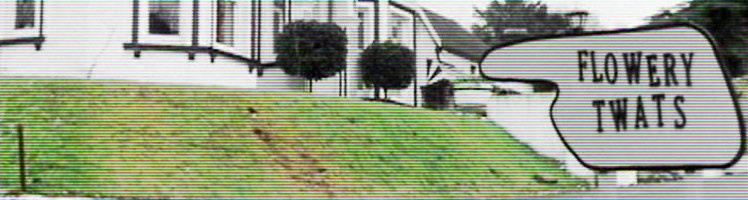
Flowery Twats sign

One of my favourite DVD commentaries I’ve ever heard is John Cleese’s on the Fawlty Towers Remastered box set.1 Of course, I could listen to John Cleese talk about comedy forever and a day, but more than that: it’s rare to hear someone of his generation so utterly committed to the art of giving a good commentary. Having clearly rewatched the episodes in preparation, there are very few awkward pauses; the whole thing is dense with facts. Moreover, rarely has someone been so endlessly generous in talking about the talents of the cast of a show… and genuinely makes you appreciate why they are so good, rather than just gushing.

My favourite thing about the commentary, though?2 His thoughts, 30 years later, as to which parts of Fawlty Towers are his favourite, and which bits he likes the least. The former have been talked about before – Basil’s Best Bits on Gold, for example – but I find the latter especially interesting. Having read a number of ill-thought-through criticisms of Fawlty Towers over the years, it seems the only person who actually has any sensible ones is a certain J. Cleese.

Here then, are some of his least favourite things about the show, as taken from his commentary. I’ve picked what I think is his most interesting criticism of each episode. Enjoy.

[Read more →]


  1. That’s Remastered in the Doctor Who Restoration Team sense, rather than this one

  2. Apart from the fact that he makes very clear that the show was written by him and Connie Booth, and not by him alone. 

Read more about...

,