Home AboutArchivesBest Of Subscribe

Smashie’s Saturday Smiles

TV Comedy

INSPECTOR FOWLER: We have all seen the musical Oliver, and are familiar with the images of jolly, apple-cheeked urchins in big hats. Well, dispel this cozy impression. The Artful Dodger was a thief, and I don’t think he’d have considered himself quite so “at home” in a juvenile detention centre, which is where I’d have put him. Thieving is thieving. And no amount of “oom-pah-pah” or “boom-titty-titty” will change that. An Englishman’s pockets are his castle.

CONSTABLE KRAY: More like his pocket billiard room.

INSPECTOR FOWLER: Detective Constable Kray, there is a place for fatuous, flippant, would-be humorous inanities, and that place is on Noel’s House Party.

The Thin Blue Line, “The Queen’s Birthday Present”
TX: 13th November 1995

Here’s a question. How many overt parodies of Noel’s House Party can you name? Ones that go beyond the very amusing Thin Blue Line joke above1, and actually start tearing the show apart properly?

[Read more →]


  1. It is notable how much the studio audience in The Thin Blue Line enjoys the gag. 

Read more about...

,

Smashie and Nicey – the End of an Era: Music Guide

TV Comedy

Nicey listening to music on headphones

What exactly is Smashie and Nicey – the End of an Era?

One of the endless joys of the show is that it’s many things. A parody of a certain kind of DJ, of course. Also a pastiche of a certain kind of documentary. But it’s also a trawl through decades of British light entertainment: a macrocosm of a particular strand of British culture.

With that in mind, it’s no surprise that the show is absolutely stuffed to the gills with music, of all different kinds. Some of them obvious, others obscure. Wouldn’t it be nice if somebody sat and worked out exactly where everything came from?

What, you want me to do it? Fine.

All times given are for the broadcast version of the show, although I’ve also noted any significant music changes made for the extended VHS edit. For any music which is taken from archive footage, I’ve provided very minimal details here; a companion article detailing all the stock footage used in the show is in the works.

[Read more →]

Read more about...

, ,

A Proper Comedy Fan

Life / Radio Comedy / TV Comedy

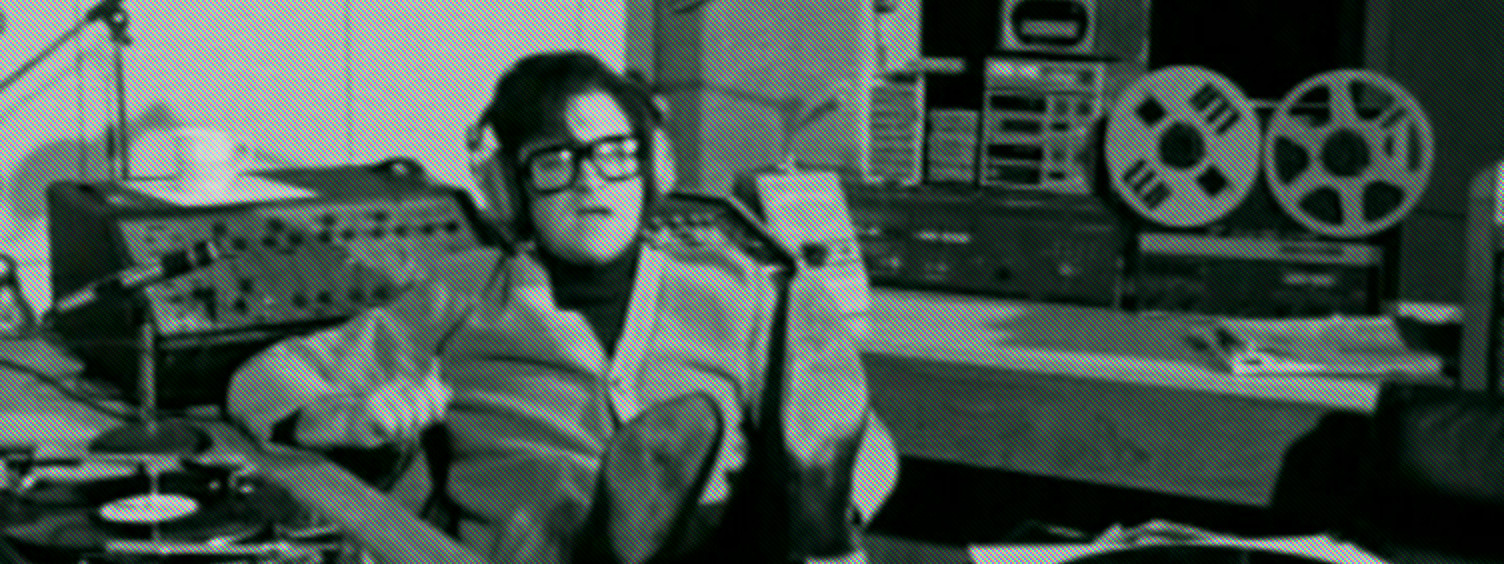
I’m supposed to have grown up with radio comedy, you know. More specifically, I’m supposed to have grown up with a radio underneath my bedclothes. Ideally listening to Blue Jam, if I had been particularly with it.

I wasn’t, so I didn’t. Oh, I just about managed a Hitchhiker’s repeat, at some point in the 90s. Beyond that, there was a whole world out there which I just didn’t bother with. If the best pictures were from radio, I wasn’t really interested in them.

The obvious question is why, and I think the answer is one of love, rather than hate. I didn’t hate radio comedy; I simply didn’t listen to it. No, my love was for the telly. I distinctly remember recording every single episode of the nineties repeats of Fawlty Towers off-air; perhaps that was the start of my love of archive television, but it didn’t feel like archive television back then. It was just TV. And I loved TV. Especially sitcoms, sketch shows, and game shows.

But surely, even if I didn’t listen to radio comedy, I at least listened to the Top 40 and stuff? Not really. The radio was on at various points, but it wasn’t really my thing. My things were obvious and comfortable: when it wasn’t television, it was my computer, a BBC Master.1 Endless time spent playing games, or programming, or writing silly things on it.

I think, when I was younger, I needed visuals. That’s how I interacted with the world. Something to look at. I watched and loved The Day Today; it wasn’t that I hated On The Hour, it just wasn’t on my radar.

So when, in the early 2000s, I found a forum online, and saw everyone talking about radio comedy… I was slightly nonplussed. That’s what I was supposed to have been doing?

Nonplussed, and inadequate. I wasn’t a proper comedy fan. Damn.

*   *   *

Fast-forward to some undetermined day in the 2010s. I’m watching the bonus features on the Series 1 DVD of That Mitchell and Webb Look. And in the Making Of documentary, David Mitchell suddenly says the following:

“We’d always wanted to be on TV, ‘cos that’s where I got into comedy really, watching TV. Growing up, watching Blackadder, and Monty Python, and that kind of thing. So yeah, I’d like to say I grew up listening to Radio 4 and The Goon Show and that kind of thing, and I did have a few tapes of The Goon Show, but basically it was TV, so I’ve always wanted to be on TV. That in my own head, is where successful comedians are.”2

I grin. Because that’s me. I wasn’t stupid after all. Somebody who is very, very, very funny felt exactly the same as I had.

And that’s how a heterosexual white male can still experience that unexpected rush of feeling represented.

  1. Better than a BBC Micro. 

  2. It’s worth paying attention to exactly what Mitchell says there. He doesn’t say that successful comedians are on television rather than radio; he clearly says “in my own head”. It’s not actually true, and he knows it. He’s talking about feelings, not facts, and carefully flags it as such. 

Flash Frames Redux

TV Comedy

Having spent an entire year writing about flash frames in The Young Ones, you really would think I was done with the whole damn thing now. And I nearly am, I promise.

However, I have one last thing to talk about. Let’s watch the first couple of minutes of “Boring”, broadcast on the 23rd November 1982.

Here’s a fun fact which I don’t think has ever been mentioned before: the entire house sequence above, up to and including “Morning has broken”, was originally supposed to be placed before the opening titles, according to the camera script. It’s probably a good idea this was changed; Neil’s line is funny as a stupid throwaway, but placing it just before the titles would give it a weight it simply couldn’t support.

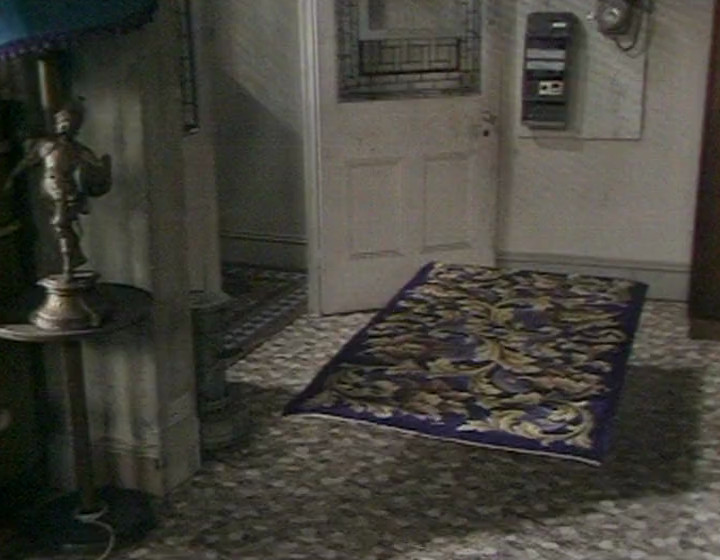
Right, enough fun, back to the flash frames. At 1:25 in the above video, something rather odd happens. We get this image, of a flying carpet, for a single frame:1

A flying rug in the hallway

What’s going on? Despite this being from Series 1, is this related to the whole Series 2 flash frames business?

[Read more →]


  1. Tech note: it’s a single frame in that video, deinterlacing the original material to 50fps. In fact, it was a single field in the original interlaced material. 

Read more about...

, , ,

“What Is the Function of This Illusion?”

TV Comedy

1. Model Shot
Starfield. We pan to reveal enormous sun. After a pause, Starbug beetles across the disc of the sun.

2. Int. Obs. Deck
Dark. Various consoles click into life as we pan round the room, and come to rest on two deep sleep units. Suddenly, one of them flares with blue light from inside, and its hood hisses back, revealing a slowly-waking LISTER, wearing soiled long johns. He sits up. His mouth tastes vile. He notices his fingernails and toenails are six inches long. LISTER pads across the room, and starts to cut his nails in a desk-mounted pencil sharpener. He catches his reflection in a blank TV screen.

LISTER: (To his reflection) Who the hell are you?

Red Dwarf, “Psirens”, Primordial Soup

The Red Dwarf episode “Psirens” was first broadcast on BBC2 on the 7th October 1993. But that’s not how a lot of Red Dwarf fans first experienced the episode. Or specifically, how they first read it.

Because in March 1993, the first Red Dwarf script book, Primordial Soup was published. This contained the scripts for the episodes “Polymorph”, “Marooned”, “Dimension Jump”, “Justice”, “Back to Reality”, and… erm, “Psirens”. Seven months before it was broadcast. Not exactly how you’d choose to reveal the first episode of a brand new series, especially one with an intriguing format change: the crew left adrift on Starbug.

[Read more →]

Read more about...

,

The Dirty Feed Christmas Message 2023

TV Comedy

“This is ‘And The Grass Won’t Pay No Mind’ by Elvis Presley. I didn’t really love Elvis. Elvis wasn’t my person. But a friend of mine said ‘Wait, you gotta listen to it’, and I remember this song was like, when it clicked for me what people were hearing in it…

I don’t know if anything beats a friend, or someone you respect, saying like: try it again. You’ve missed it. Try it again.”

– Greta Gerwig, Desert Island Discs

Read more about...

Balls.

TV Comedy

Every so often, there’s a comment on this site which deserves a wider audience. Today, it’s Rob Blackmon, asking this question on The Young Ones, “Interesting”:

“Finally, if anyone has access to shooting scripts or otherwise, what was it that Mike was clearly about to say after “Cinderella” entered the flat? Such an obvious, jarring cut and he just gave us that look, like.”

It certainly is one of the most obvious and clunky edits in the whole of The Young Ones. Here’s a reminder:

It is indeed very clear that Mike is about to say something, and we rudely cut away. But what, exactly?

I do, in fact, have access to the script. And the bon mot we were so cruelly deprived of is the following:

CINDERS: I’m looking for my prince.
MIKE: (POINTING UPSTAIRS) Maybe they’re upstairs with my etchings baby. (TO CAMERA) At least I didn’t make a joke about balls or fairy queens.

Certainly not a joke worth keeping. Although what’s vaguely annoying is that if they’d cut away from Mike a second earlier, before he’d had a chance to start looking at the camera, the moment would be far less jarring.

Yes, next year on Dirty Feed, expect more lectures about editing in sitcoms from 1982.

Read more about...

Freeze-Frame Gonna Drive You Insane, Part Five

TV Comedy

Part OnePart TwoPart ThreePart FourPart Five

When I started this set of articles about flash frames, right back at the beginning of the year, I never thought it would end up taking five parts to tell this story properly. In particular, I never really wanted to get into the nitty gritty of endless Young Ones repeats.

Unfortunately, as Demosthenes would say: tough shit. It is actually relevant; or, at least, one particular repeat run is. In August 1995, something happened which we can’t entirely avoid. Because not only did The Young Ones begin a fresh, almost-complete run from the start on BBC2… but half the episodes were broadcast in a version never seen before.

“Oil”, “Boring”, and “Bomb” aired in their original, 35 minute versions. “Time” aired in its usual 1985 edit, with the flash frame cut out. But the rest of the episodes aired in brand new 30-minute edits, designed at least partially to make the series easier to repeat by fitting into a standard half hour slot.

[Read more →]

Read more about...

,

The Mystery of Zectron 2000

Children's TV / TV Comedy

Sometimes my knowledge of a popular science fiction sitcom can reach mildly irritating proportions. When this happens, I do feel the urge to share it with you, and spread the irritation around equally,

Take the following episode of Press Gang Series 4, “Love and War”, broadcast on the 28th January 1992. We are particularly interested in the voice of Colin’s ludicrous electronic briefcase.

Now, the actor for the briefcase isn’t listed in the end credits. Which is peculiar – sure, it’s only a voice, and an electronically altered one at that, but it’s very clearly a comedy performance. But not to worry. Because I recognised that voice.

Here’s a clip from Red Dwarf, “Emohawk: Polymorph II”, broadcast nearly two years later, on the 28th October 1993. The gang are being tracked by a Space Corps External Enforcement Vehicle, whose voice should sound rather familiar:

Luckily, the voice is actually credited in Red Dwarf. It’s Hugh Quarshie, probably best known as Ric Griffin for nearly two decades of Holby City, as well as appearing in The Phantom Menace, and a million and one other things.

And one of those million and one other things? Erm, Press Gang. Specifically, the two parter “The Last Word” in Series 3, broadcast on the 28th May/4th June 1991. With that, the final piece of the puzzle clicks into place: Series 3 and 4 of Press Gang were produced and shot simultaneously.

So who did Quarshie play in “The Last Word”? Answer: Inspector Hibbert, an important character with a crucial moral choice at the end of the show. I won’t spoil that moral choice if you haven’t seen it, but here he is from earlier in the story:

Those two episodes are some of the most serious material the show ever did. Who knew that Quarshie’s turn as an Inspector in a two-parter mediating on gun crime, suicide, and the nature of guilt would be followed up with… a silly talking briefcase? Come to think of it, that seems to be Press Gang in a nutshell.

Still, it really is a shame he wasn’t credited in “Love and War”, but at least Hugh Quarshie got a proper credit in “The Last Word”.

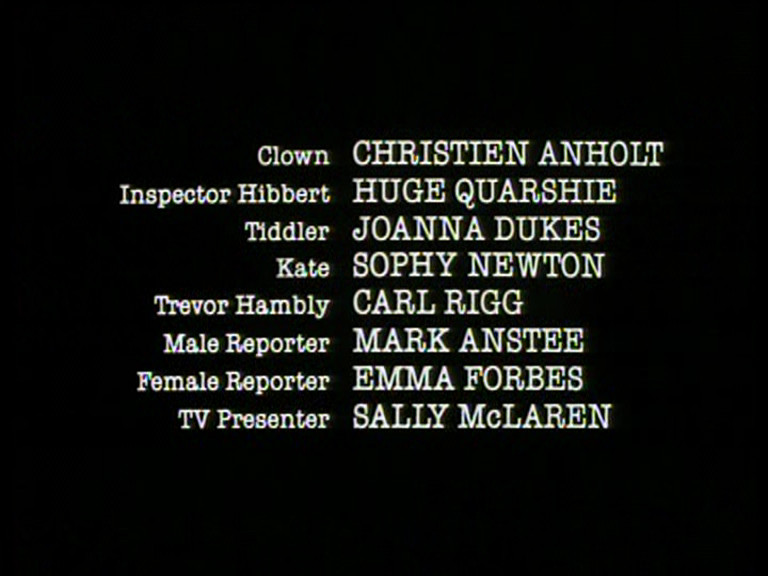
The Last Word Part One credit sequence, featuring Hugh Quarshie as Inspector Hibbert

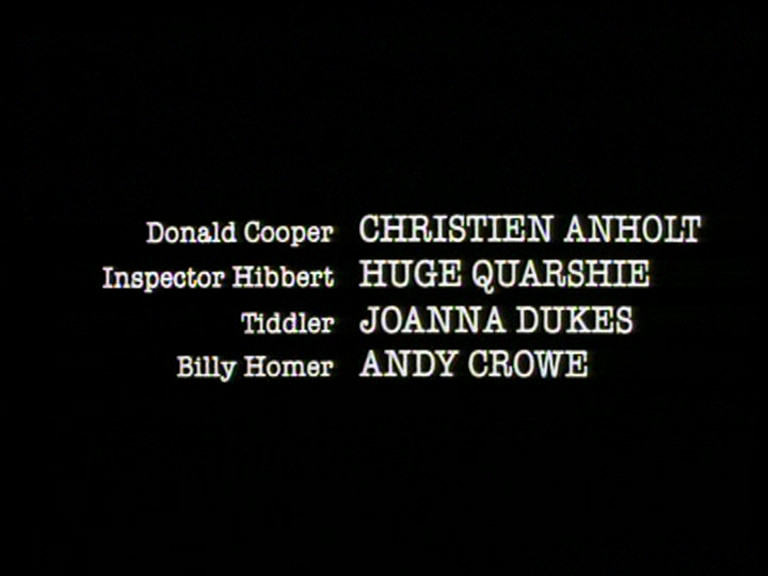
The Last Word Part Two credit sequence, featuring Hugh Quarshie as Inspector Hibbert

Huge Quarshie?

Oh well.

With thanks to Christopher Wickham. A version of this post was first published in the November issue of my monthly newsletter.

Read more about...

,