Home AboutArchivesBest Of Subscribe

Wyverns and Wherefores

TV Comedy

Series 1, Episode 7 of Marion & Geoff, first broadcast on the 7th November 2000, is different from every other episode in the first series of that show. How?

For the answer, let’s turn to the excellent DVD commentary, with Blick and Brydon.

HUGO BLICK: We’ve got to be honest with you, viewers. We structured nine episodes, we knew exactly where we were with nine episodes. What happens is, we sit in a room, we talk about the character, and Rob improvises, and I’m listening to what he’s doing. And I often go away, and kind of construct all his brilliant improvisations… and I get loads of material I can’t use, because the spine of the story takes it in a different direction.

So I thought ‘Well, let’s just leave one episode open, and put him into an area where he’s waiting for something to happen, and use all those lovely improvisations, to just put them in.’ And so we came up with this cunning device, that we would take you to a zoo. […]

ROB BRYDON: There are some great gags in this episode that I like.

HUGO BLICK: We just threw them in!

ROB BRYDON: But you also get a bit of history, you get a bit of backstory…

HUGO BLICK: Yeah, yeah, yeah… I was never casual about the whole construction. But it is remarkable, we just sewed them together. I remember saying ‘Right, try that one. Remember that one? Do that one.’

Which is very interesting, but far too much of a useful insight for Dirty Feed. What I really want to know is exciting stuff like: which exact safari park does Keith visit?

At first, the answer seems obvious enough. At the end of the episode as it appeared on first transmission, we get a shot of a sign. Wyvern Safari Park. Brilliant.
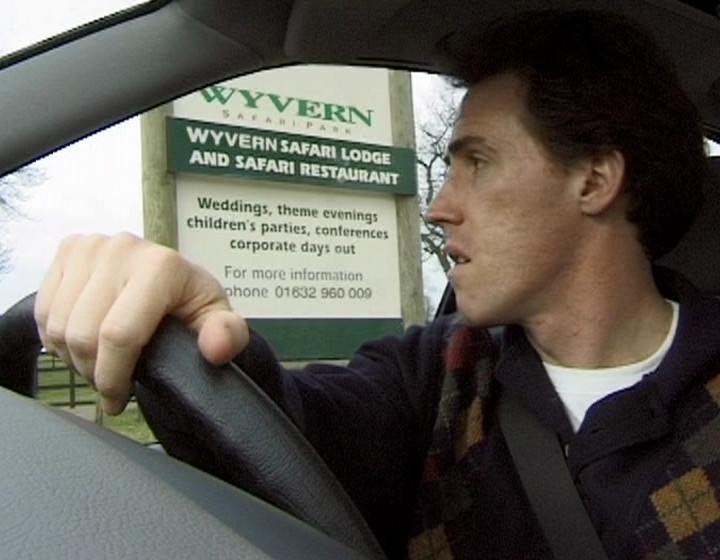
Keith, sitting outside a sign for Wyvern Safari Park

The only problem: Wyvern Safari Park doesn’t exist. I’m sure this is obvious to those of you who know your safari parks. I am not a safari park expert, and I had no idea. So like a fool, I went looking for Wyvern… and was mildly surprised when I couldn’t find it.

Luckily, the commentary track on the DVD reveals the answer:

HUGO BLICK: You will see at the very end that the place that we went to we stop outside, and it looks like a blatant kind of advertisement. It wasn’t, it was just where we stopped. The sign and the name is there. A large amount of this production budget was spent on airbrushing out the name of the real place, and it’s now called something else…. there we are. Wyvern.

ROB BRYDON: Is there no such place?

HUGO BLICK: I feel you might find that there isn’t.

With that knowledge in mind, it’s easy to tell that the sign has been altered in post-production. In fact, so easy, that I’m surprised I didn’t notice when I first watched it. The WYVERN in WYVERN SAFARI LODGE is too big and in the wrong font, and the phone number is in the wrong font as well.1 Indeed, the phone number 01632 960 009 is recommended by Ofcom for productions to use as a dummy number.

What the commentary track doesn’t reveal, however, is what the name of the real place was. It’s not too hard to work it out, though: the answer is clearly Woburn Safari Park, in Bedfordshire. The following photo, uploaded to Flickr in 2014, is clearly either the same sign, or an identical copy close by:
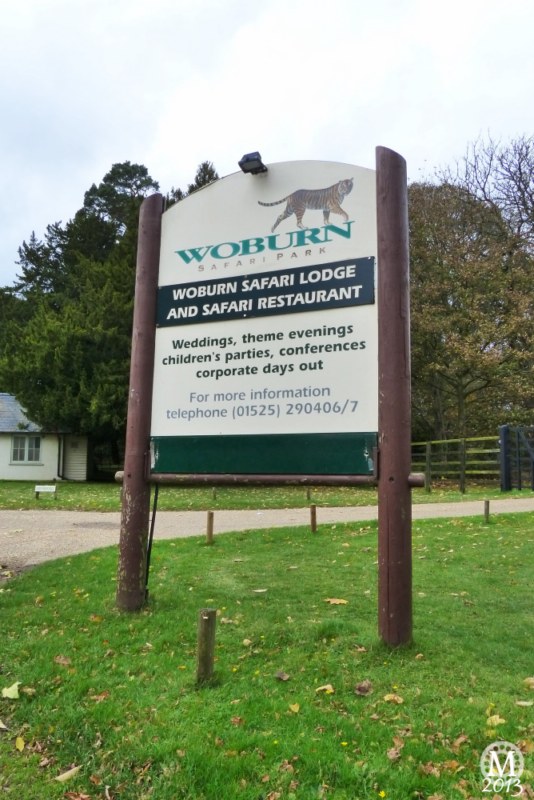
The original Woburn Safari Park sign

Woburn has had a rebrand since then, and a brand new logo; I highly suspect the above sign has been replaced by now. But if anybody wants to do some field research, by all means do so.

Still, it’d be nice to see the original shot of Keith driving past the Woburn sign, wouldn’t it?

[Read more →]


  1. To be fair, when Keith starts the car and the sign moves, they do an extremely good job at tracking the movement on the changed elements. Very well done for a TV show made in 2000. 

Read more about...

,

50/60 Vision

TV Comedy

One thing I’ve been thinking about recently is the danger of assumptions when it comes to figuring out shit about old telly. I’ve always made it a point of order to invite people to correct or challenge me on my writing here… whether it’s a minor point, or something which upends a whole article.1

My recent piece on A Small Summer Party had a query which falls somewhere in the middle of that continuum. After I spent a great deal of time examining the difference between the 50-minute broadcast version and the 60-minute DVD version of the show, Smylers asked the following question in the comments:

“You describe changes as being from the broadcast version to the DVD version (which makes sense, as the order you experienced them in), but is there any evidence as to which was made first — or indeed why they bothered to make two versions?

If the longer version were made especially for the DVD release, that would obviously involve far more work than simply putting the existing broadcast version on the disk. So either that was a commercial decision that the DVD would sell more copies (making enough additional profit to pay for the extra work) with the “Director’s Cut”, or Hugo Blick was sufficiently irked by the TV edit that they were prepared to put the effort in to ensure that their vision of how it should be was finally out there.

The commercial potential-reason feels weak to me: the release was primarily of series 2, and surely most potential purchasers would buy it even if all the episodes were as broadcast.

The other possible chronology is that the show was originally made as a 60-minute edit, but the BBC then asked them to cut it down to 50 minutes for scheduling reasons.”

Which is a highly sensible question… and not something I’d even thought about, despite picking through the programme in such detail that I spotted the addition or removal of single shots. That’s my brain for you.

I tossed off a quick reply:

“So in this particular case, I believe that the DVD version was made later, for the simple reason that I think the final scene shows a clear rethink of how to approach things. It feels like a true, after-the-fact Director’s Cut.”

Ahem. Wrong. In fact, I could not have been more wrong. As Paul Hayes then went on to reveal in the thread:

“It appears from the listings on the BBC archive that the hour version is a /71 edit, and the 50-minute one a /72.”

In other words: the first version edited of the programme was the 60-minute version which ended up on the DVD, and the second version was the 50-minute one, which was what was originally broadcast, and which is currently on iPlayer.

Not content with that – after all, I’ve already been caught out once on this – I did some further digging. The /71 version is indeed identical to the DVD version, aside from the end credits.2 And the /72 version is definitely what was broadcast back in 2001.

I also have some EXCITING dates:

  • The /71 version is dated 16th July 2001.
  • The /72 version is dated 8th August 2001.
  • The programme was broadcast – in its /72 edit – on the 3rd September 2001.
  • The DVD was released – in its /71 edit – on the 14th June 2004.

In other words, we can confidently state that the hour-long version released on DVD wasn’t created for the DVD, and certainly wasn’t Hugo Blick’s “second take” on the show. It was the very first version created. It just took nearly three years for us to be able to watch it.

[Read more →]


  1. I’ve only ever had to pull a whole piece on here once in 15 years. I really should rewrite that damn thing properly. 

  2. The credits are all on individual cards, as opposed to scrolling, although the scrolling credits which ended up being used are also tacked onto the end as an option. 

Read more about...

A Slightly Larger Summer Party

TV Comedy

“We are aware that there will be those who say ‘What a shame to show us these characters’, but I would always rather be brave.”

Rob Brydon, The Sunday Telegraph, 2nd September 2001

“You’ve got to carry on swimming. I was really keen not to put this precious character of ours in a cul-de-sac where he only functions in a monologue.”

Hugo Blick, The Sunday Telegraph, 2nd September 2001

A Small Summer Party [is] entirely unnecessary. In advance, this was billed as our chance to “find out how the Marion and Geoff story began”. The trouble was that we already knew.”

James Walton, The Daily Telegraph, 4th September 2001

A Small Summer Party, broadcast on the 3rd September 2001, remains a controversial entry into the Marion & Geoff1 universe. A retelling of that fateful summer barbecue where Keith’s life finally falls apart, I can’t say I really understand complaints that the episode was pointless, simply because we already knew what had happened. I don’t see sitcom as a content-delivery mechanism for plot.

I do have a bit more sympathy with James Walton’s other issues with the show:

“It was in episode six of the original series that Keith (Rob Brydon), speaking more quickly and nervously than usual, told us about the day when it finally became undeniably apparent that his wife was unfaithful and his marriage was finished… As ever, we had to do a bit of thinking to figure out from Keith’s version precisely what had happened – but, as ever, this only made the effect more powerful. Which may be why that 10-minute monologue managed to be funnier, sadder, subtler, and more dramatic than yesterday’s 50-minute fleshing out of the events Keith had described.”

As evidenced by Rob Brydon and Hugo Blick’s comments which opened this article, this is exactly what they were worried about when it came to making A Small Summer Party… and decided it was worth the risk. It’s a risk which I personally think comes off, despite entirely understanding why people fell in love with the monologues. I just think A Small Summer Party has more than enough of interest going on in its own right.

I admit that my favourite thing about the show is fairly obvious: how it plays as a found footage horror movie. A suburban Blair Witch Project, which was a film still relatively fresh in the memory back in 2001. But this surely wasn’t just some clever-clever directorial flourish; framing the show like this was far from an arbitrary choice. To Keith, this really is a horror film: the most horrific day of his life. And to most of the audience watching, this kind of domestic horror is far more likely to be a part of their lives than encountering evil spirits… or even an axe murderer.

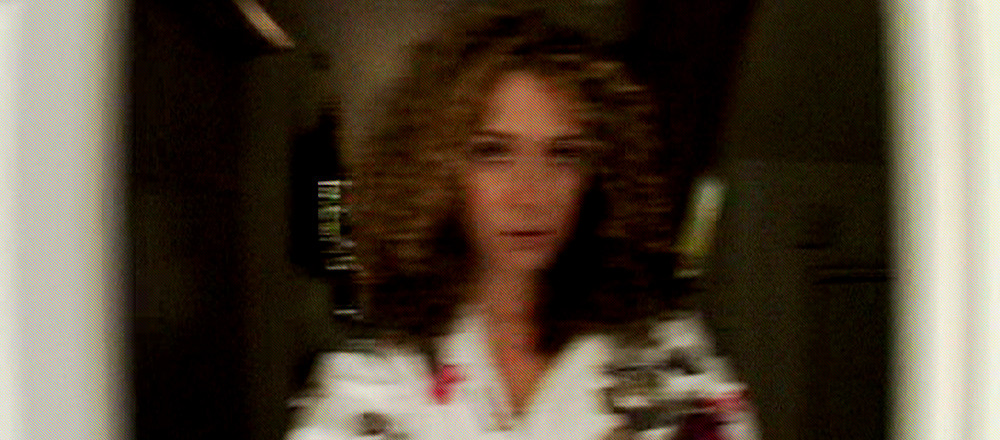
A glowering, indistinct Marion in the kitchen doorway

A successful piece of television or not, one thing is true: A Small Summer Party has barely been repeated on the Beeb. It got a couple of BBC Choice showings the week after first transmission, and then nothing. Three years later in 2004, it did get a DVD release as part of Series 2… but not in its originally-seen broadcast version. Instead, it was an extended edit – specifically labelled as a Director’s Cut – increasing the 50-minute special up to a full hour.

Which is perhaps a bit of an strange choice. Even if you enjoyed the show, it was surely long enough in its 50-minute form, if not a little too long. It’s at times like this that you wish the release had a commentary, so we could hear all of Blick’s reasoning. As it is, we’ll have to prod the show ourselves.

You know the drill by now. Let’s take a look at every single difference between the broadcast version of A Small Summer Party, and the extended DVD edit. All timings given are for the broadcast edit, which is also available on iPlayer.

[Read more →]


  1. Marion & Geoff, or Marion and Geoff? I’m going for Marion & Geoff unless I’m quoting someone else, because that’s what it’s called on the show’s title card. Bite me. 

Read more about...

,