
Recently, we had some tradesmen round to our house to fit a new hob. Before they arrived, my partner decided to hide our newly-purchased copy of the complete Love Thy Neighbour DVD boxset. After all, they might think we were massive racists. Or even worse, start telling us that Enoch was right.
Now, I’m most certainly not the right person to mount a full-throated defence of the show, not least because parts of it don’t deserve a full-throated defence. But while watching it for an article recently, I have to admit that the series kept surprising me. Partly because, away from the racial slurs, how line-by-line funny it can be.
EDDIE: I’m not going to go where I’m not wanted.
JOAN: Well, if you kept to that, you’d never go anywhere.
But also: the show kept going to areas that I didn’t quite expect. The fourth episode of Series 11 does a great parallel story between the men striking at work and the women striking at home, which is far more intelligent politically than most of the racial material. The first episode of Series 2, after opening with the usual sitcom shenanigans, contains a startling moment where Barbie, the black neighbour, bawls her eyes out at Eddie calling the police on her housewarming party. A scene which is not played for laughs in any way.
Oh, and the second episode of that series? I could have guessed that Eddie would be convinced to make a fool of himself by his black neighbour. I could have guessed this might involve a stupid fake voodoo dance around a tree at midnight. I might even have guessed that this dance would be naked. What I wouldn’t have guessed is that Jack Smethurst would fully commit to the bit, and we would get lots of luxuriant shots of his bare arse. All shot in a way where it’s very clear that it’s him, and not a stand-in.
For many, the language alone will render the series forever unwatchable. I won’t argue those people are wrong, and I certainly won’t argue that anybody reading this article is obligated to give it a go. But I will say that I went into the show expecting to watch the bare minimum for research purposes… and instead, I found far more of interest than I expected.
To be honest, that’s the main thing I want out of television these days.
* * *
Anyway, think pieces on Love Thy Neighbour‘s racial politics are ten-a-penny. That’s not what you read this site for. Yes, it’s prop newspaper time again, fans.
And this time round, these newspapers tell us something rather interesting about the production of the show. Let’s take a look at the very first episode broadcast, on the 13th April 1972:
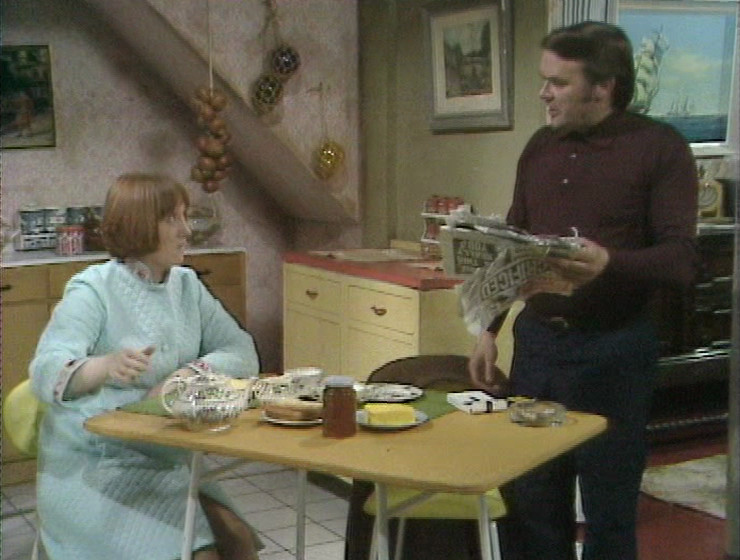

Eddie is holding a copy of the Daily Mirror. Specifically, the edition published on the 1st April 1972:2
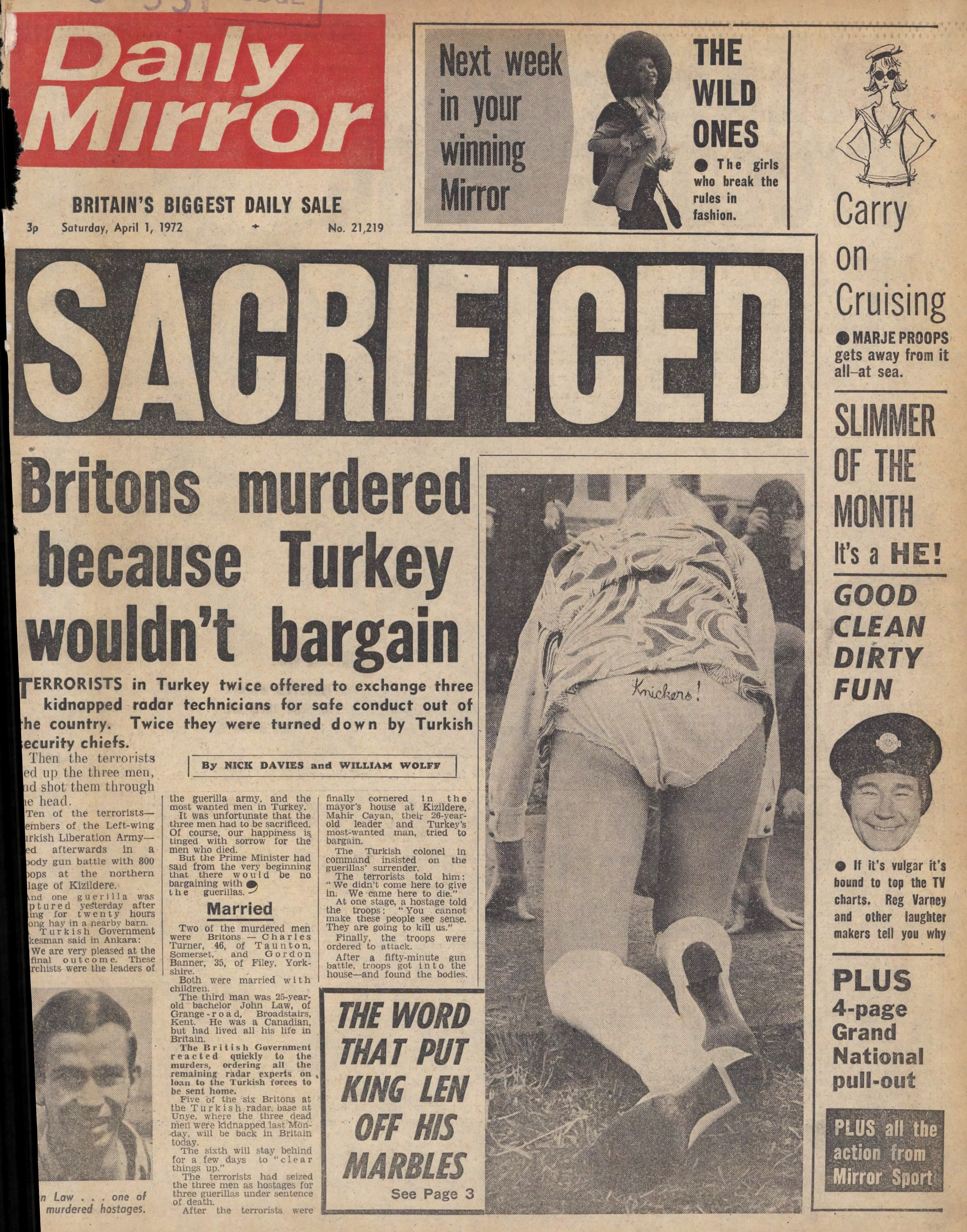
Which means that the first episode of the series was shot a maximum of 12 days before transmission.
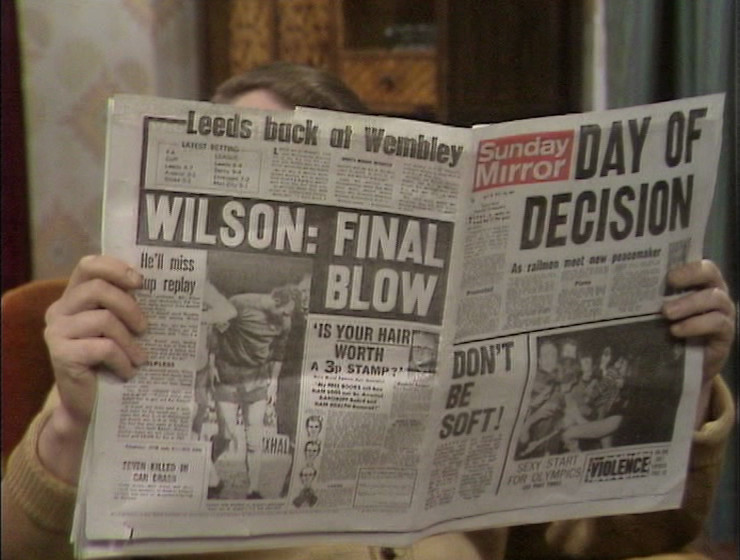
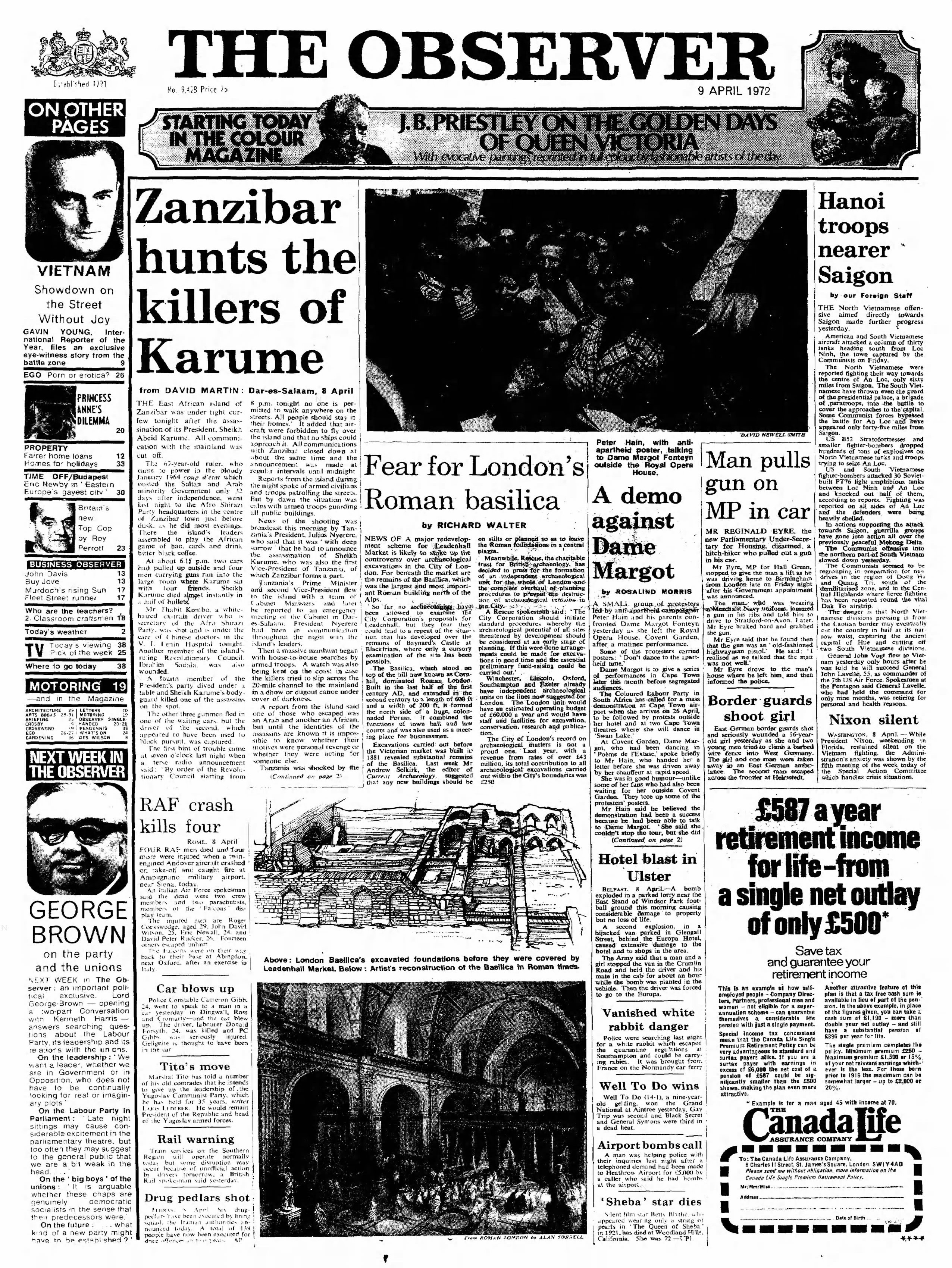
The second episode has some infuriating shots where we can nearly, but not quite, see what newspaper Eddie is holding. But the third episode, broadcast on the 27th April 1972, more than makes up for it. My job isn’t usually this easy.
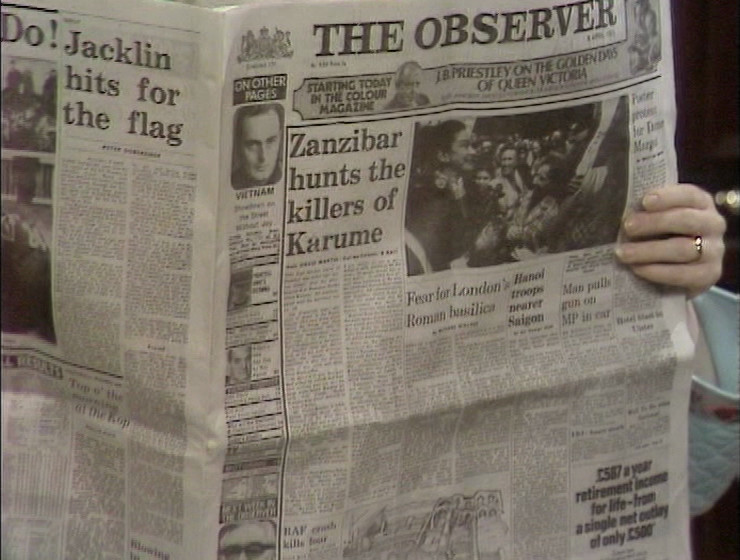
So Joan is holding The Observer from the 9th April 1972:
Oddly enough, Eddie is holding the Sunday Mirror from the following week, published on the 16th April 1972:
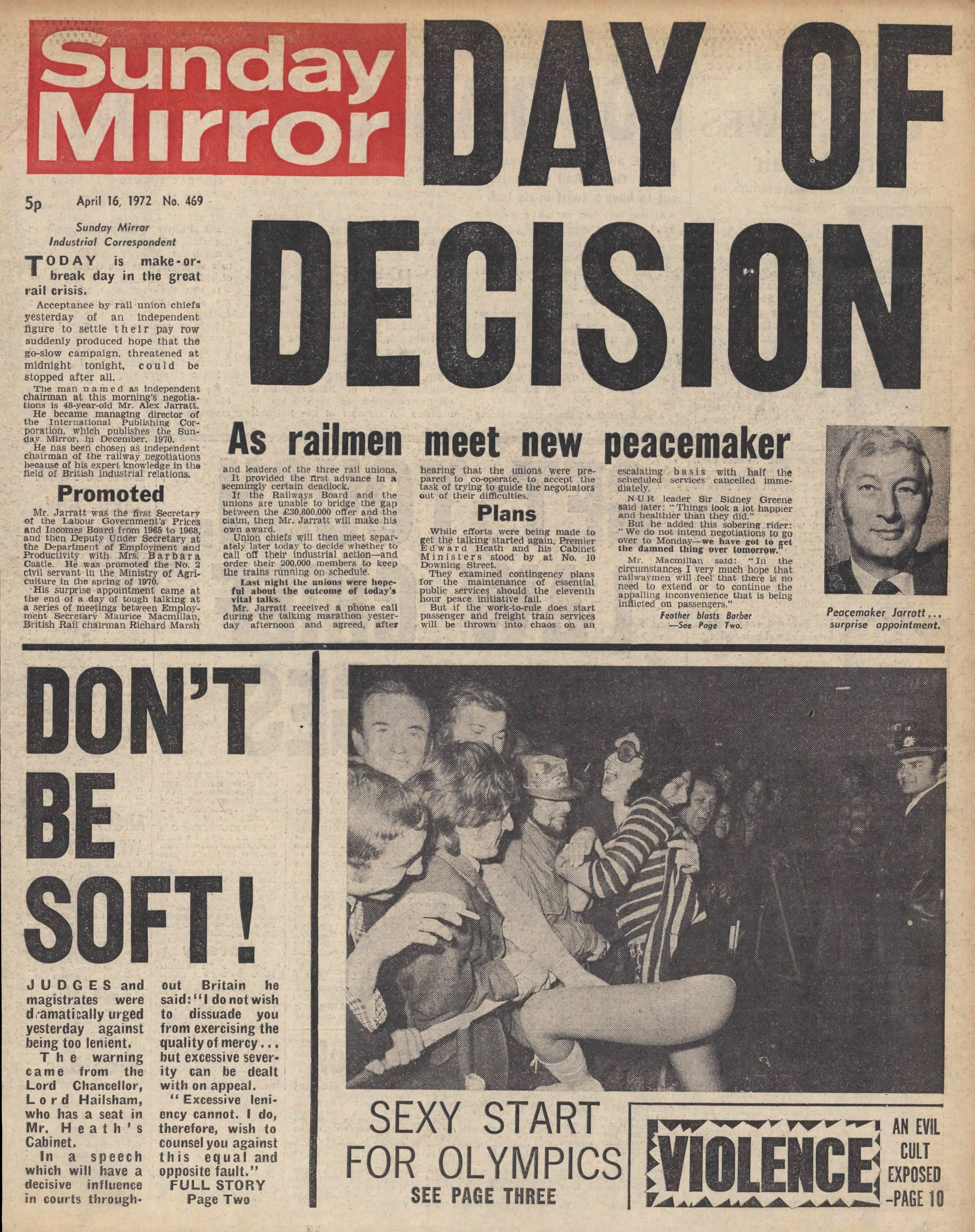
Maybe Joan was just a slow reader. This time round, we can confidently say that the episode was transmitted within 11 days of its studio recording.
After the break, and presumably the very next day, we see Eddie reading the Daily Mirror again:
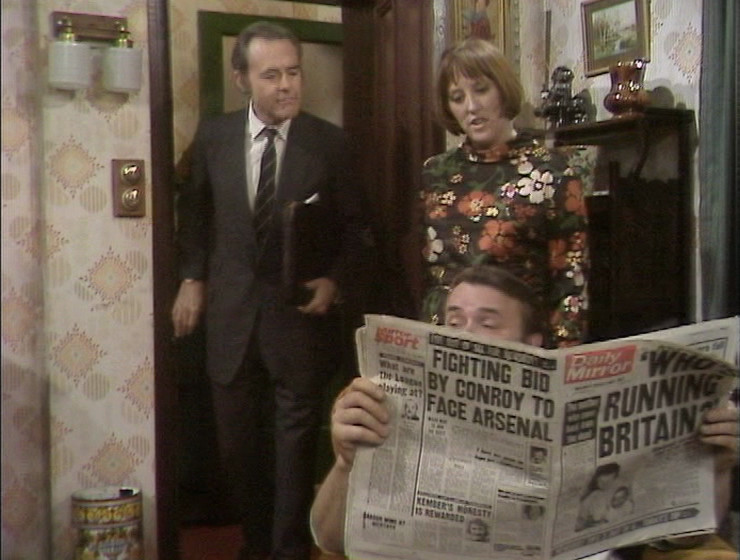
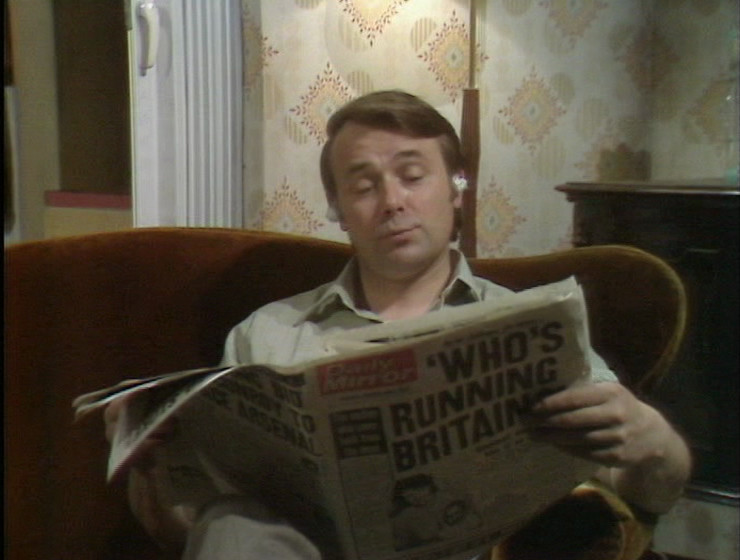
And which edition of the Daily Mirror? Erm, the one from the 14th April 1972. A paper published two days earlier than the one he was reading before the break.
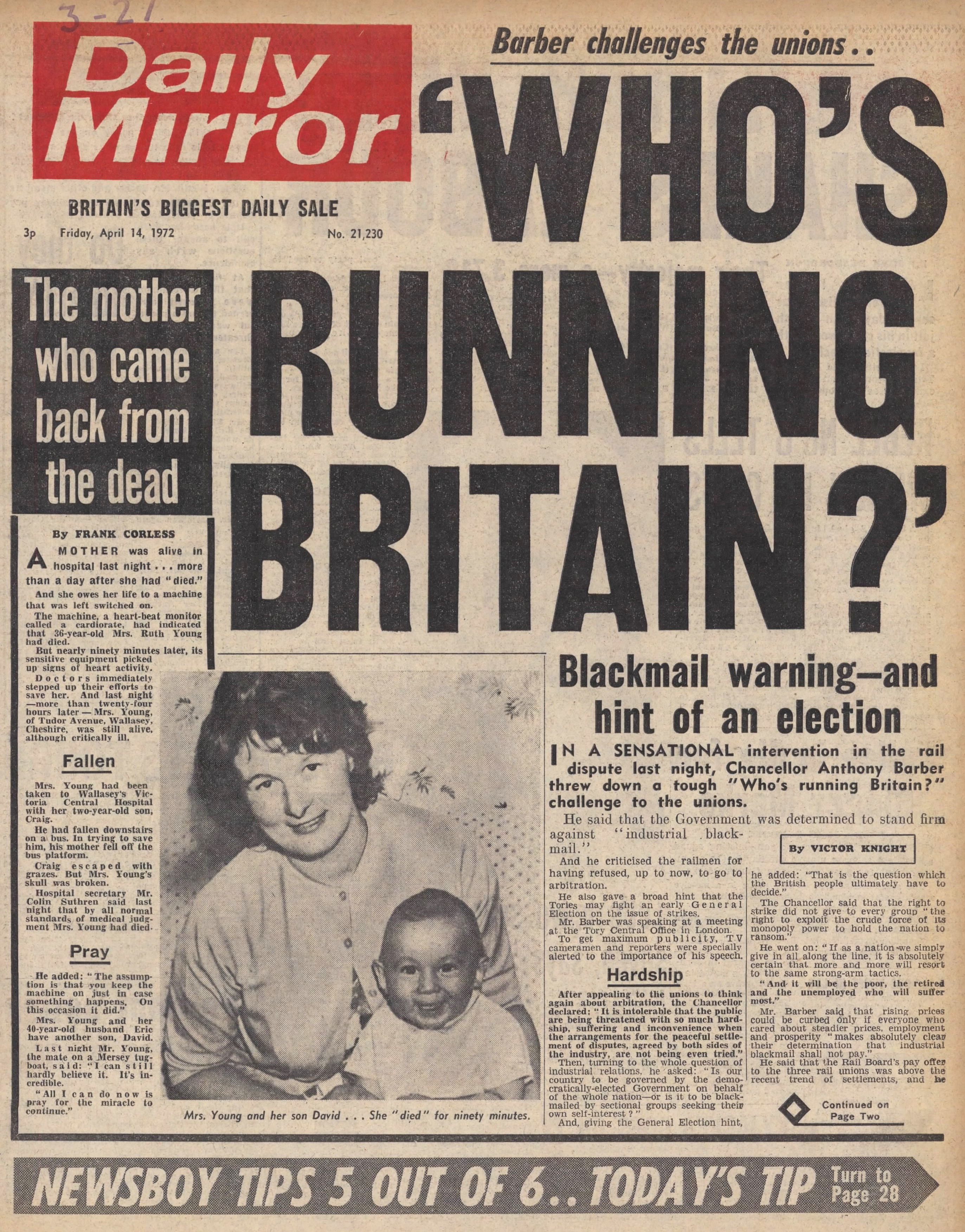
This is the worst thing Love Thy Neighbour has ever done.
All of which I find fascinating, putting temporal errors to one side for a moment. I will admit to an utter delight in sitcoms which were recorded this close to transmission. There’s something alive about making television in this way, which is slightly dulled by episodes sitting on the shelf for months, as is typically the case now. Especially with a show like Love Thy Neighbour, which whilst not usually topical in the sense of ripping stories from the headlines, is still an utterly contemporary show.
But there’s something very, very funny about all this. Because what was the 14th April 1972? Why that was the day after the first episode of Love Thy Neighbour was broadcast.
And what did the Daily Mirror TV review page cover in that edition?
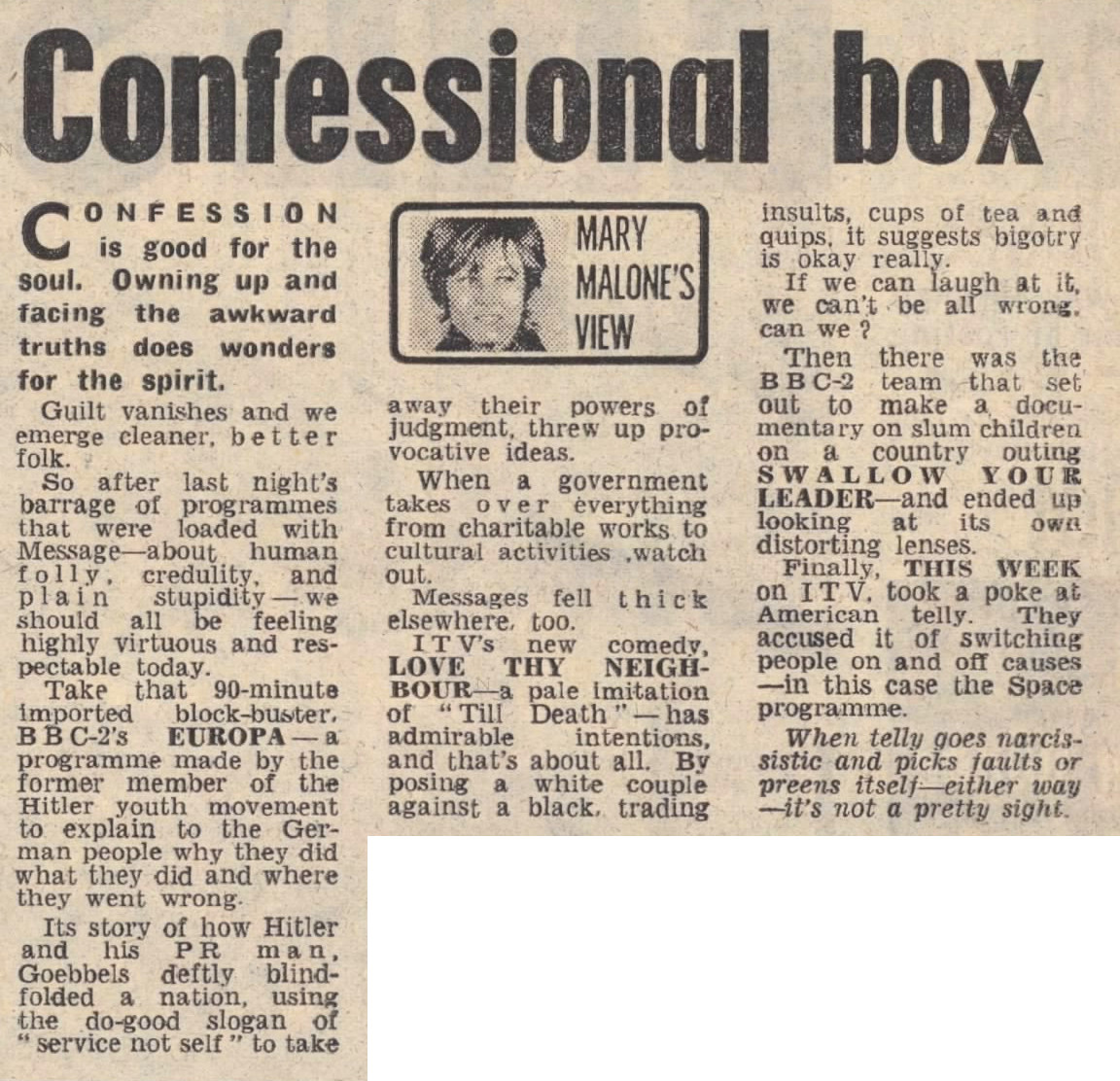
“Messages fell thick elsewhere, too.
ITV’s new comedy, LOVE THY NEIGHBOUR – a pale imitation of “Till Death” – has admirable intentions, and that’s about all. By posing a white couple against a black, trading insults, cups of tea and quips, it suggests bigotry is okay really.
If we can laugh at it, we can’t be all wrong, can we?”
So due to the very short lead time between recording and transmission, Jack Smethurst ended up using a prop in the third episode of Love Thy Neighbour which featured a review slagging off the first episode of Love Thy Neighbour.
Television can be cruel.